

Comprehensive Overview
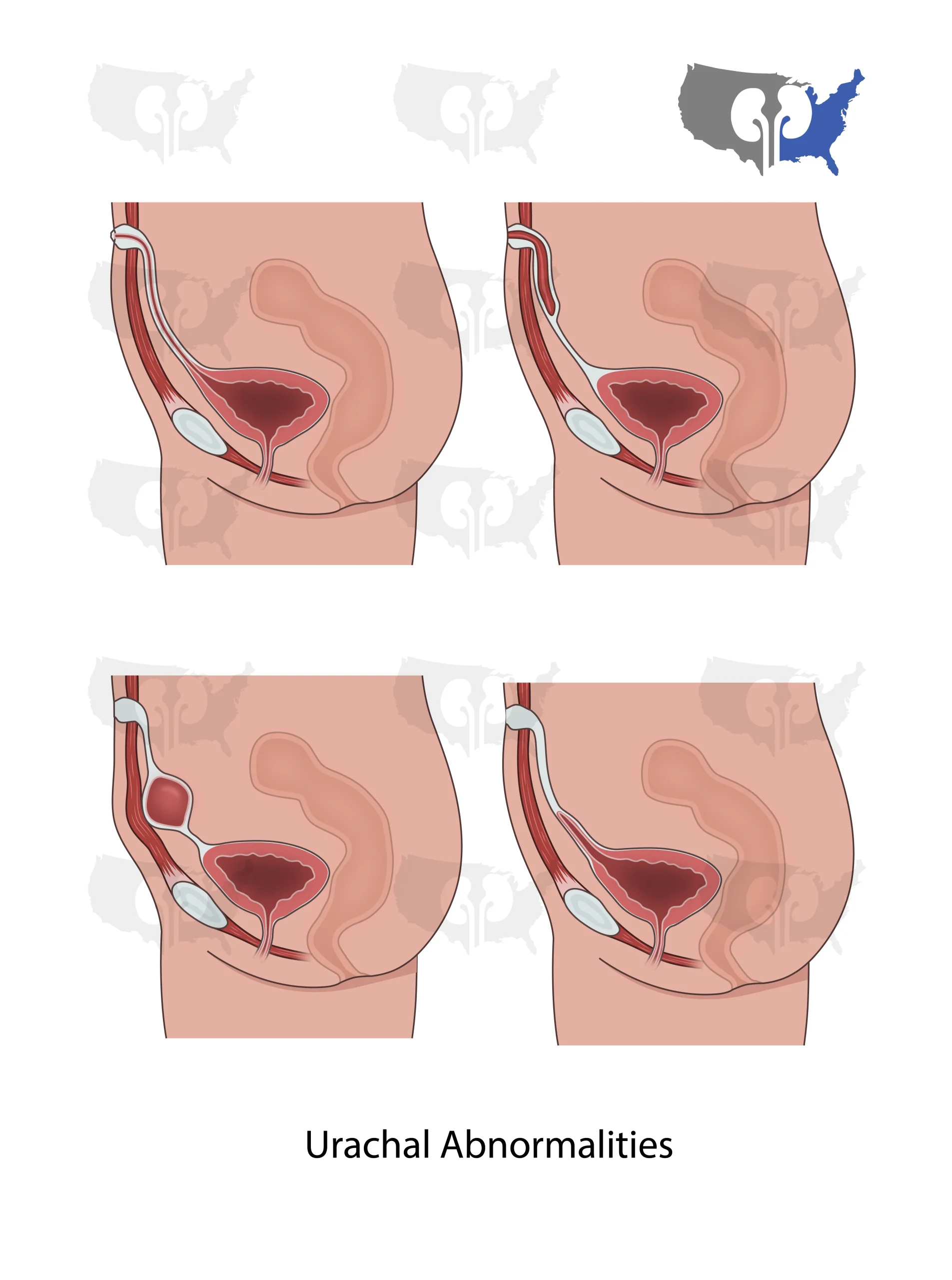
Urachal anomalies are rare conditions resulting from incomplete closure of the urachus, a tube that connects the bladder to the umbilical cord during fetal development. These anomalies can persist after birth and cause symptoms such as infections or discharge. At Crossroads Urology, we specialize in diagnosing and managing urachal anomalies to prevent complications and improve patient outcomes.
Types of Urachal Anomalies
- Patent urachus: The entire urachus remains open, causing urine to leak from the belly button.
- Urachal cyst: A fluid-filled pocket forms within the urachus, potentially leading to infection.
- Urachal sinus: The urachus remains open at the umbilical end, causing drainage.
- Urachal diverticulum: The bladder end of the urachus remains open, forming a pouch that can lead to infections.
Symptoms of Urachal Anomalies
- Persistent drainage or discharge from the belly button.
- Redness, swelling, or pain near the umbilicus.
- Recurrent urinary tract infections.
- Abdominal pain or discomfort.
- Fever or chills if an infection is present.
If you experience these symptoms, the specialists at Crossroads Urology can provide a thorough evaluation and effective treatment.
Causes and Risk Factors
Urachal anomalies result from incomplete closure of the urachus during fetal development. Risk factors include:
- Male gender, as urachal anomalies are more common in males.
- Congenital conditions affecting the urinary tract.
- Delayed diagnosis, which may lead to infections or complications.
At Crossroads Urology, we use advanced diagnostic techniques to confirm the presence and type of urachal anomaly.
Diagnosis
Diagnosing urachal anomalies at Crossroads Urology involves:
- Medical history and physical examination: Evaluating symptoms and the presence of discharge or swelling.
- Imaging studies: Ultrasound, CT scan, or MRI to visualize the urachus and identify abnormalities.
- Urinalysis or culture: To detect infections associated with the anomaly.
Treatment Options
Treatment depends on the type and severity of the anomaly:
- Antibiotics: For infections caused by urachal cysts or sinuses.
- Drainage: For infected urachal cysts, often performed under imaging guidance.
- Surgical excision: Removing the urachus to prevent recurrence or complications, especially for patent urachus, cysts, or diverticula.
- Observation: In asymptomatic cases, regular monitoring may be sufficient.
At Crossroads Urology, we prioritize minimally invasive approaches to treat urachal anomalies effectively and reduce recovery time.
Preventing Complications
If left untreated, urachal anomalies can lead to recurrent infections, abscess formation, or, in rare cases, malignancy. Early diagnosis and treatment at Crossroads Urology help prevent these complications and ensure long-term health.
Expert Care at Crossroads Urology
If you suspect a urachal anomaly or experience related symptoms, the team at Crossroads Urology is here to provide compassionate and expert care. Contact us today to schedule a consultation and explore the best treatment options for your needs.