

Comprehensive Overview
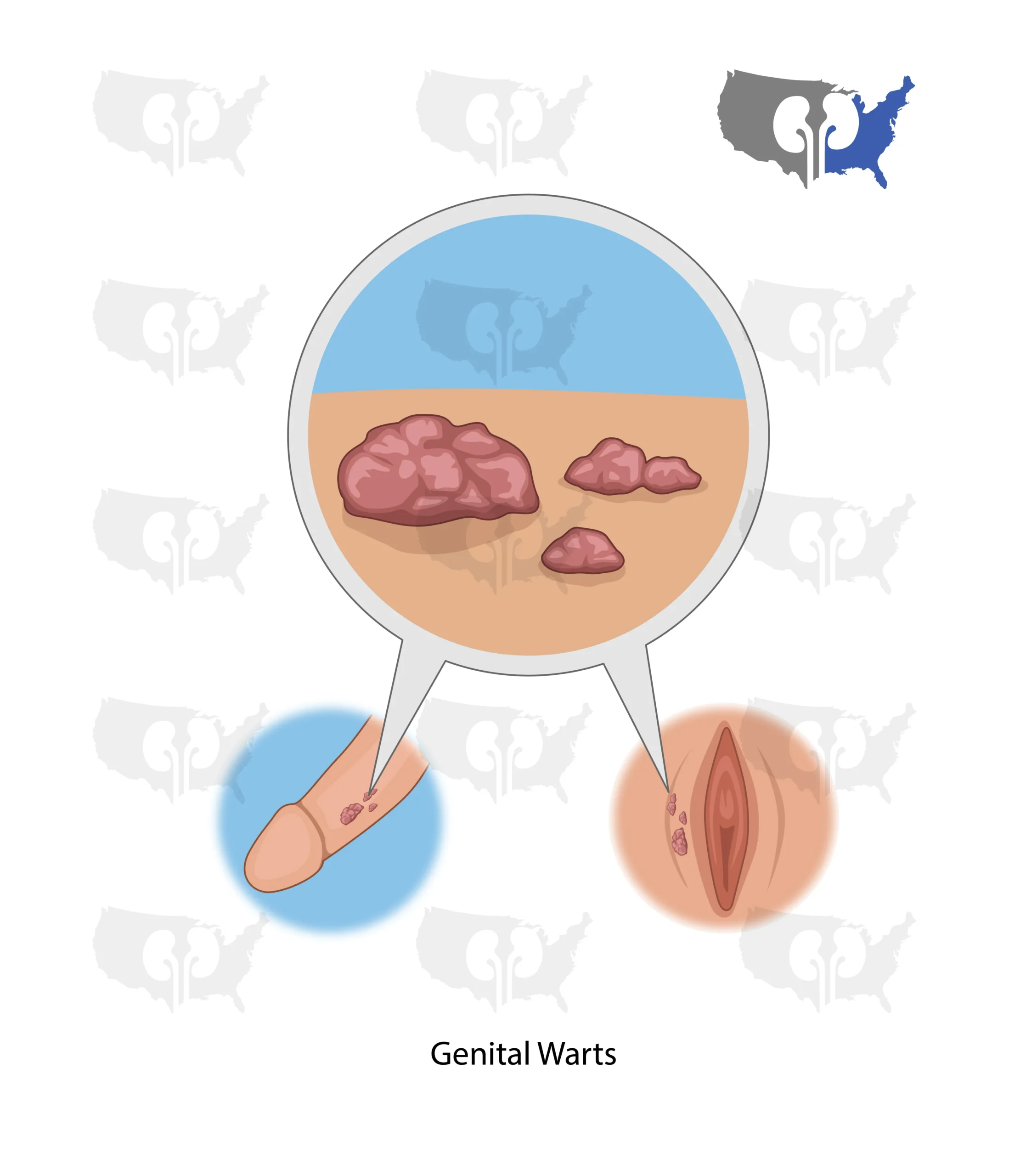
Genital warts are a common sexually transmitted infection (STI) caused by certain strains of the human papillomavirus (HPV). These small, flesh-colored or grayish growths can appear on or around the genital area, including the penis, vulva, vagina, cervix, or anus. Although genital warts are usually harmless and painless, they can cause discomfort, embarrassment, and, in some cases, an increased risk of certain cancers.
At Crossroads Urology, we provide expert diagnosis and treatment for genital warts, helping patients manage symptoms and prevent recurrence.
Symptoms of Genital Warts
- Small, raised, or flat growths in the genital area
- Clusters of warts that resemble cauliflower-like bumps
- Itching or discomfort in the affected area
- Bleeding during sexual intercourse
Transmission and Risk Factors
HPV is transmitted through sexual contact with an infected person, including vaginal, anal, and oral sex. While condoms can help reduce the risk of HPV transmission, they do not eliminate the risk entirely, as HPV can be transmitted through skin-to-skin contact.
Risk factors for genital warts include:
- Multiple sexual partners
- Unprotected sex
- A weakened immune system
- A history of other STIs
Diagnosis
To diagnose genital warts, your Crossroads Urology provider will perform a physical examination. In some cases, a small tissue sample (biopsy) may be taken to confirm the diagnosis. Women may also be advised to undergo a Pap smear to screen for cervical cancer, as certain strains of HPV are linked to a higher risk of developing this type of cancer.
Treatment Options
Treatment for genital warts depends on the size, location, and number of warts. Options include:
- Topical medications: Prescription creams or ointments, such as imiquimod, podofilox, or trichloroacetic acid, can be applied directly to the warts to help eliminate them.
- Cryotherapy: Freezing the warts with liquid nitrogen can help remove them. Multiple treatments may be necessary.
- Electrocautery: Burning the warts with an electrical current can effectively remove them.
- Laser therapy: High-intensity light is used to destroy the warts, particularly for extensive or difficult-to-access warts.
- Surgical excision: In some cases, the warts may be removed surgically by cutting them out with a scalpel or using a loop electrode (LEEP).
Prevention
While treatments can remove the warts, they do not cure the underlying HPV infection, meaning warts can recur in the future. To reduce the risk of developing genital warts and other HPV-related health issues, consider the following tips:
- Use condoms: Condoms can help reduce the risk of HPV transmission, though they do not eliminate it entirely.
- Limit sexual partners: Reducing the number of sexual partners can lower the risk of exposure to HPV.
- Get vaccinated against HPV: The HPV vaccine can protect against the strains most commonly associated with genital warts and certain types of cancer.
- Regular health screenings: Attend sexual health screenings regularly, especially if you are sexually active or have a history of HPV infection.
Expert Care at Crossroads Urology
If you are concerned about genital warts or are experiencing symptoms, it is important to consult with Crossroads Urology. Our experienced team can provide a thorough evaluation, discuss treatment options, and help you take steps to manage your sexual health and reduce future risks.