

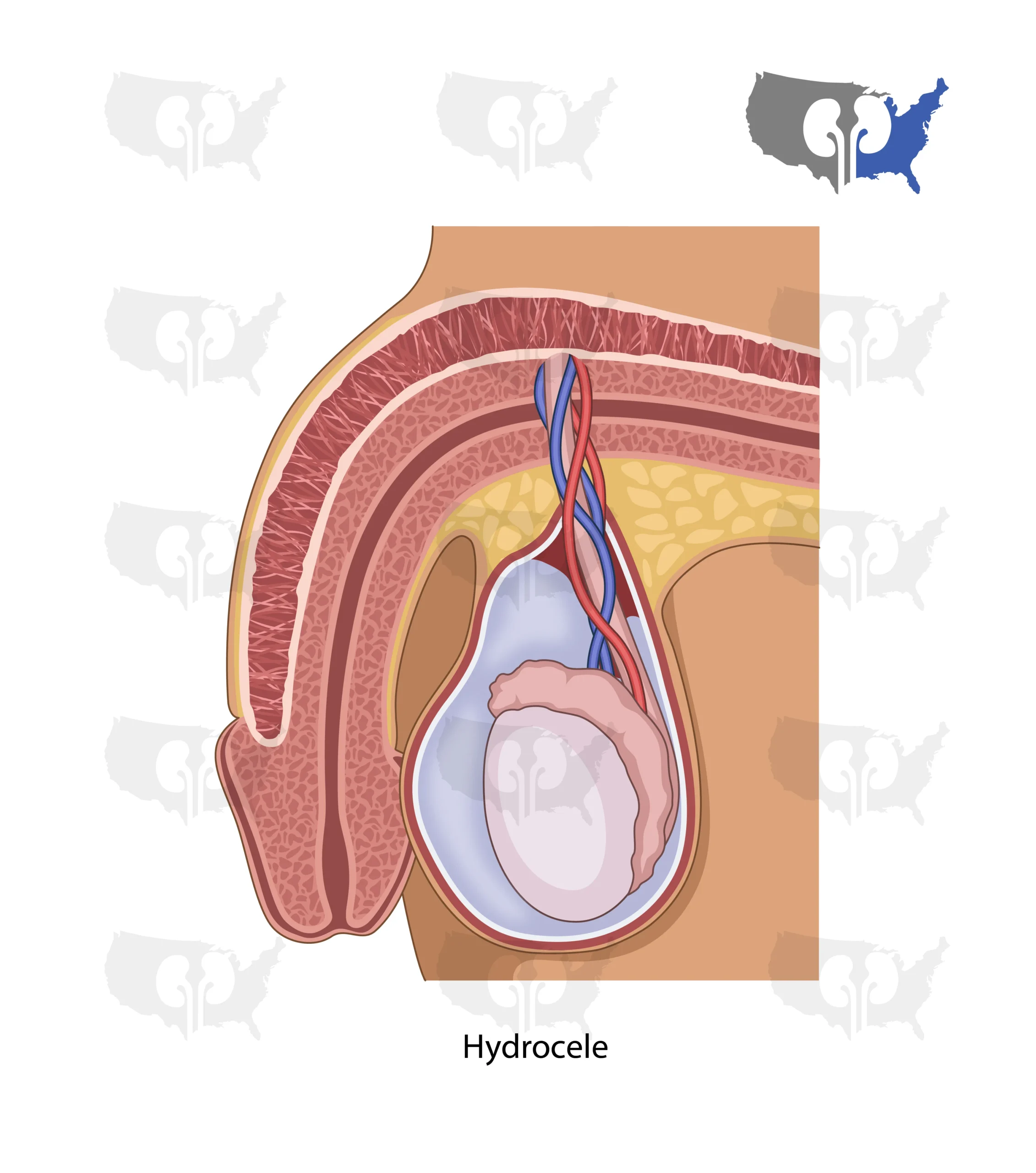
Comprehensive Overview
A hydrocele is a fluid-filled sac that forms around one or both testicles, causing swelling in the scrotum. This condition is common in newborns and usually resolves on its own within the first year of life. However, hydroceles can also develop in older boys and men, often due to injury, inflammation, or infection. Although typically painless and harmless, a hydrocele can cause discomfort and may require treatment if it grows too large or leads to complications.
At Crossroads Urology, we specialize in the diagnosis and treatment of hydroceles, providing comprehensive care to alleviate symptoms and address any underlying causes.
Symptoms of a Hydrocele
- Swelling in one or both sides of the scrotum
- A feeling of heaviness in the scrotum
- Discomfort or aching in the scrotum, particularly with larger hydroceles
- In some cases, difficulty with urination due to the size of the hydrocele
Causes of Hydrocele
Hydroceles may develop for various reasons, including:
- Congenital hydrocele: Present at birth, this type of hydrocele occurs when the sac surrounding the testicles fails to close properly, allowing fluid to accumulate.
- Injury or trauma: Physical injury to the scrotum or groin can cause fluid to build up around the testicle.
- Infection or inflammation: Infections, including sexually transmitted infections (STIs), or inflammation of the testicles (orchitis) or epididymis (epididymitis) can lead to the formation of a hydrocele.
- Testicular tumors: Although rare, hydroceles can sometimes be associated with testicular tumors, which require prompt evaluation and treatment.
Diagnosis
To diagnose a hydrocele, your Crossroads Urology provider will perform a physical examination and may order additional tests such as:
- Transillumination: Shining a light through the scrotum to determine whether the swelling is fluid-filled.
- Ultrasound: An imaging test to confirm the presence of fluid and rule out other conditions such as testicular tumors or hernias.
Treatment Options
In many cases, hydroceles do not require treatment and may resolve on their own. However, if the hydrocele causes discomfort or continues to grow, treatment options include:
- Observation: In mild cases, your provider may recommend monitoring the hydrocele to see if it resolves without intervention.
- Surgical repair (hydrocelectomy): For larger or symptomatic hydroceles, surgical removal of the fluid-filled sac may be necessary. This is a straightforward procedure that can typically be performed on an outpatient basis.
- Aspiration and sclerotherapy: In some cases, fluid may be drained from the hydrocele, and a solution may be injected to prevent fluid from reaccumulating. However, this option is less commonly used due to the potential for recurrence.
Expert Care at Crossroads Urology
If you are experiencing symptoms of a hydrocele or have concerns about swelling in the scrotum, it is important to seek evaluation at Crossroads Urology. Our experienced team will provide a thorough diagnosis and discuss the best treatment options to ensure your comfort and well-being.