

Comprehensive Overview
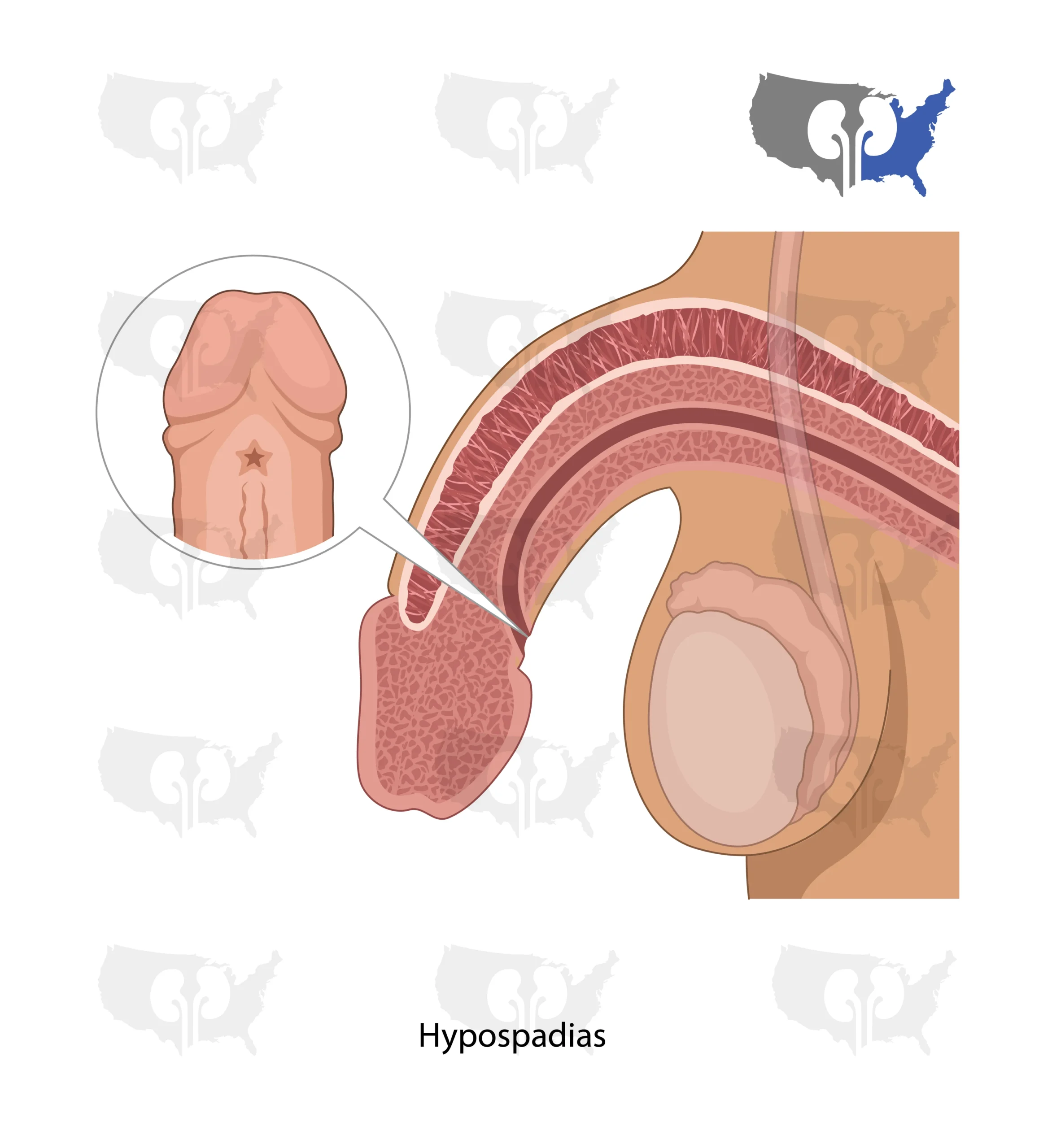
Hypospadias is a congenital condition in which the opening of the urethra is located on the underside of the penis rather than at the tip. This condition occurs in approximately 1 in every 200 male births and can vary in severity depending on the location of the urethral opening. While hypospadias typically does not cause significant medical problems, it can affect urinary function and the appearance of the penis, and in some cases, it may impact sexual function later in life.
At Crossroads Urology, we provide expert evaluation and surgical correction for hypospadias to ensure normal urinary and sexual function and improve cosmetic outcomes.
Types of Hypospadias
The severity of hypospadias depends on where the urethral opening is located. The three main types include:
- Distal hypospadias: The urethral opening is located near the tip of the penis (the most common form).
- Midshaft hypospadias: The urethral opening is located along the shaft of the penis.
- Proximal hypospadias: The urethral opening is located near the base of the penis or the scrotum (the most severe form).
Symptoms and Complications
In addition to the abnormal position of the urethral opening, other symptoms and complications of hypospadias may include:
- Abnormal curvature of the penis (chordee): The penis may curve downward, especially during erections, which can interfere with sexual function.
- Spraying or deflected urine stream: Boys with hypospadias may have difficulty directing their urine stream, often requiring them to sit to urinate.
- Inability to urinate while standing: In more severe cases, boys with hypospadias may not be able to urinate while standing.
- Cosmetic concerns: The appearance of the penis may be altered due to the position of the urethral opening and any associated curvature.
Diagnosis
Hypospadias is typically diagnosed at birth during a physical examination. In most cases, further diagnostic testing is not necessary. However, if the hypospadias is associated with other urogenital anomalies or if the diagnosis is unclear, additional imaging or evaluations may be recommended.
Treatment Options
Surgical correction is the primary treatment for hypospadias. The goals of surgery are to reposition the urethral opening, straighten the penis if needed, and improve urinary function and appearance. Surgery is usually performed when the child is between 6 and 18 months of age.
- Urethroplasty: A procedure to reconstruct the urethra and move the urethral opening to its normal location.
- Chordee repair: If abnormal curvature is present, surgical correction may be required to straighten the penis.
- Multiple-stage surgery: In more severe cases, multiple surgeries may be necessary to achieve optimal functional and cosmetic outcomes.
Post-Surgical Care
After surgery, it is important to follow your Crossroads Urology provider’s instructions for post-operative care, which may include:
- Medication: Pain relief and antibiotics may be prescribed to prevent infection and manage discomfort.
- Catheter care: In some cases, a catheter may be temporarily placed to help with urination while the urethra heals.
- Follow-up appointments: Regular check-ups will be scheduled to monitor healing and ensure the success of the surgery.
Expert Care at Crossroads Urology
If your child has been diagnosed with hypospadias, or if you have concerns about your child’s urinary or genital development, consult with Crossroads Urology. Our experienced pediatric urology team will provide expert guidance and care to ensure the best possible outcomes for your child’s health and well-being.