

Comprehensive Overview
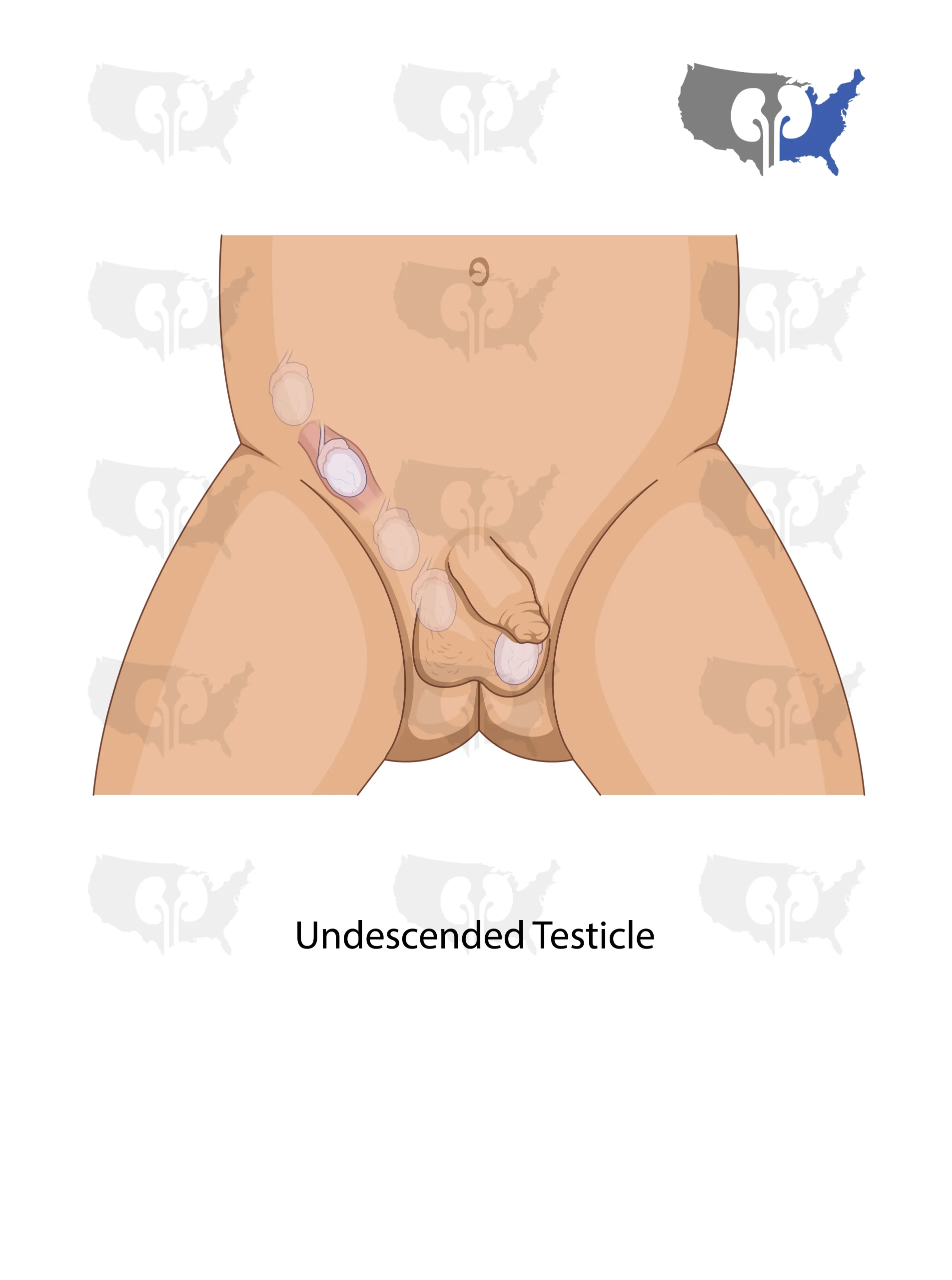
An undescended testicle, also known as cryptorchidism, occurs when one or both testicles fail to descend into the scrotum before birth. This condition is common in male infants, particularly those born prematurely, and may require medical intervention if the testicle does not descend naturally. At Crossroads Urology, we offer expert diagnosis and treatment to ensure proper testicular development and prevent long-term complications.
Symptoms of an Undescended Testicle
- Absence of one or both testicles in the scrotum.
- Asymmetry or an unusually small scrotum.
- Inguinal swelling, indicating the testicle may be located in the inguinal canal.
If you notice these signs in your child, the specialists at Crossroads Urology are here to provide a comprehensive evaluation and expert guidance.
Causes and Risk Factors
Several factors can increase the risk of an undescended testicle:
- Premature birth: Infants born early are more likely to have undescended testicles.
- Low birth weight: Smaller babies have a higher incidence of cryptorchidism.
- Family history: A genetic predisposition may play a role.
- Hormonal or chromosomal abnormalities: These can disrupt normal testicular descent.
- Environmental exposures: Certain factors during pregnancy, such as maternal smoking, may increase risk.
Our providers at Crossroads Urology take these factors into account when diagnosing and planning treatment for cryptorchidism.
Diagnosis
Diagnosing an undescended testicle at Crossroads Urology involves:
- Physical examination: Assessing the scrotum and inguinal region to locate the testicle.
- Imaging studies: Ultrasound or MRI may be used in certain cases to confirm the diagnosis or locate a non-palpable testicle.
Treatment Options
The appropriate treatment depends on the age of the child, the location of the testicle, and the potential for spontaneous descent:
- Observation: Many undescended testicles descend on their own within the first few months of life. Monitoring is often recommended during this period.
- Hormonal therapy: In rare cases, injections of human chorionic gonadotropin (hCG) may be considered, though success rates are limited.
- Surgical intervention (Orchiopexy): If the testicle has not descended by 6-12 months of age, surgery is typically recommended to reposition the testicle in the scrotum.
At Crossroads Urology, our experienced surgeons perform orchiopexy with precision and care, ensuring the best possible outcomes for your child.
Preventing Complications
Prompt treatment is essential to reduce the risk of complications, including:
- Impaired fertility due to abnormal testicular function.
- Increased risk of testicular cancer.
- Testicular torsion or inguinal hernia.
Expert Care at Crossroads Urology
At Crossroads Urology, we are committed to providing exceptional care for children with undescended testicles. Our compassionate team works closely with families to ensure the best treatment plan for your child’s needs. If you have concerns about cryptorchidism, contact us today to schedule a consultation and take the first step toward optimal care.