

Comprehensive Overview
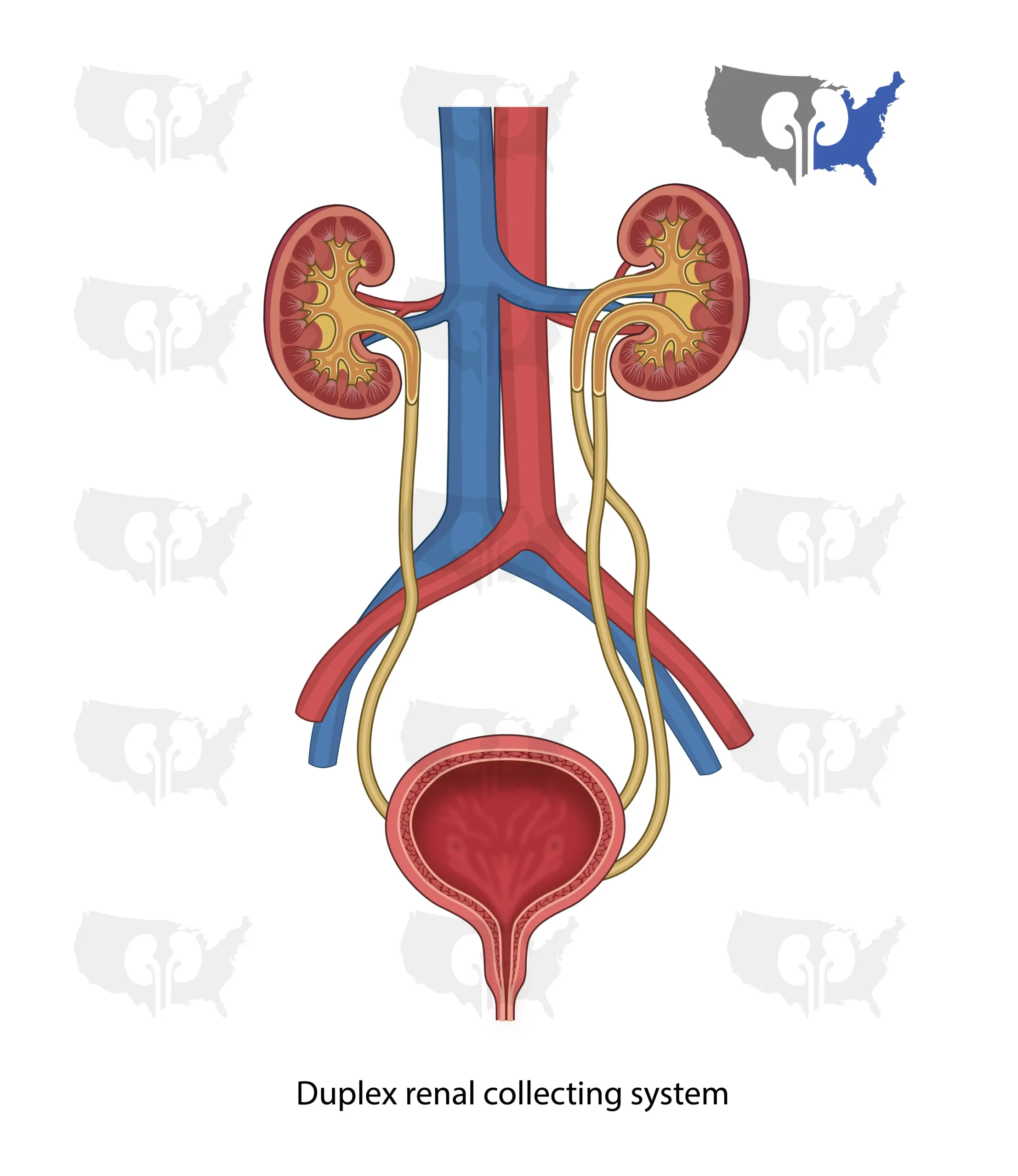
A duplex renal collecting system, also known as a duplicated or double collecting system, is a congenital (present at birth) condition in which a kidney has two ureters instead of one. These ureters are responsible for transporting urine from the kidney to the bladder. This anatomical variation is relatively common, occurring in approximately 1 in every 125 people, and it can affect one or both kidneys.
At Crossroads Urology, we offer expert evaluation and management for patients with duplex renal collecting systems, ensuring the best outcomes and personalized care.
Symptoms and Potential Complications
Although many individuals with a duplex renal collecting system may have no symptoms or health issues, the condition can sometimes be associated with other urinary tract anomalies, leading to complications such as:
- Vesicoureteral reflux: A condition where urine flows back from the bladder into the ureters and kidneys, increasing the risk of urinary tract infections (UTIs) and kidney damage.
- Ureterocele: A bulging or swelling of the ureter as it enters the bladder, which can obstruct urine flow and lead to UTIs or other complications.
- Obstructed ureter: A blockage in the ureter can cause urine to accumulate in the kidney, leading to hydronephrosis (swelling of the kidney) and potential kidney damage.
Symptoms to Watch For
Complications related to a duplex renal collecting system can manifest through symptoms such as:
- Frequent UTIs
- Flank pain or discomfort
- Blood in the urine (hematuria)
- Difficulty urinating or a weak urine stream
- Incontinence or urinary urgency
Diagnosis
A duplex renal collecting system is often discovered incidentally during imaging studies, such as ultrasounds or CT scans, performed for unrelated reasons. However, if complications arise, additional tests may be necessary, including:
- Intravenous pyelogram (IVP): A type of X-ray that provides detailed images of the urinary tract.
- Nuclear renal scans: These scans assess the function of the affected kidney and ureters.
Treatment Options
Treatment for a duplex renal collecting system depends on whether complications are present. Most cases require no treatment and can be monitored over time. However, if complications arise, the following treatments may be considered:
- Antibiotics: Frequent or persistent UTIs may require antibiotics to treat infections and prevent further complications.
- Surgical intervention: In cases of vesicoureteral reflux, ureterocele, or obstructed ureter, surgical procedures such as ureteral reimplantation, ureterocele incision, or pyeloplasty may be necessary to correct the issue and protect kidney function.
Expert Care at Crossroads Urology
If you or a loved one has been diagnosed with a duplex renal collecting system and is experiencing symptoms or complications, consult with Crossroads Urology. Our experienced team will guide you through the diagnostic and treatment process, ensuring the best possible outcomes for your urinary health.