

Comprehensive Overview
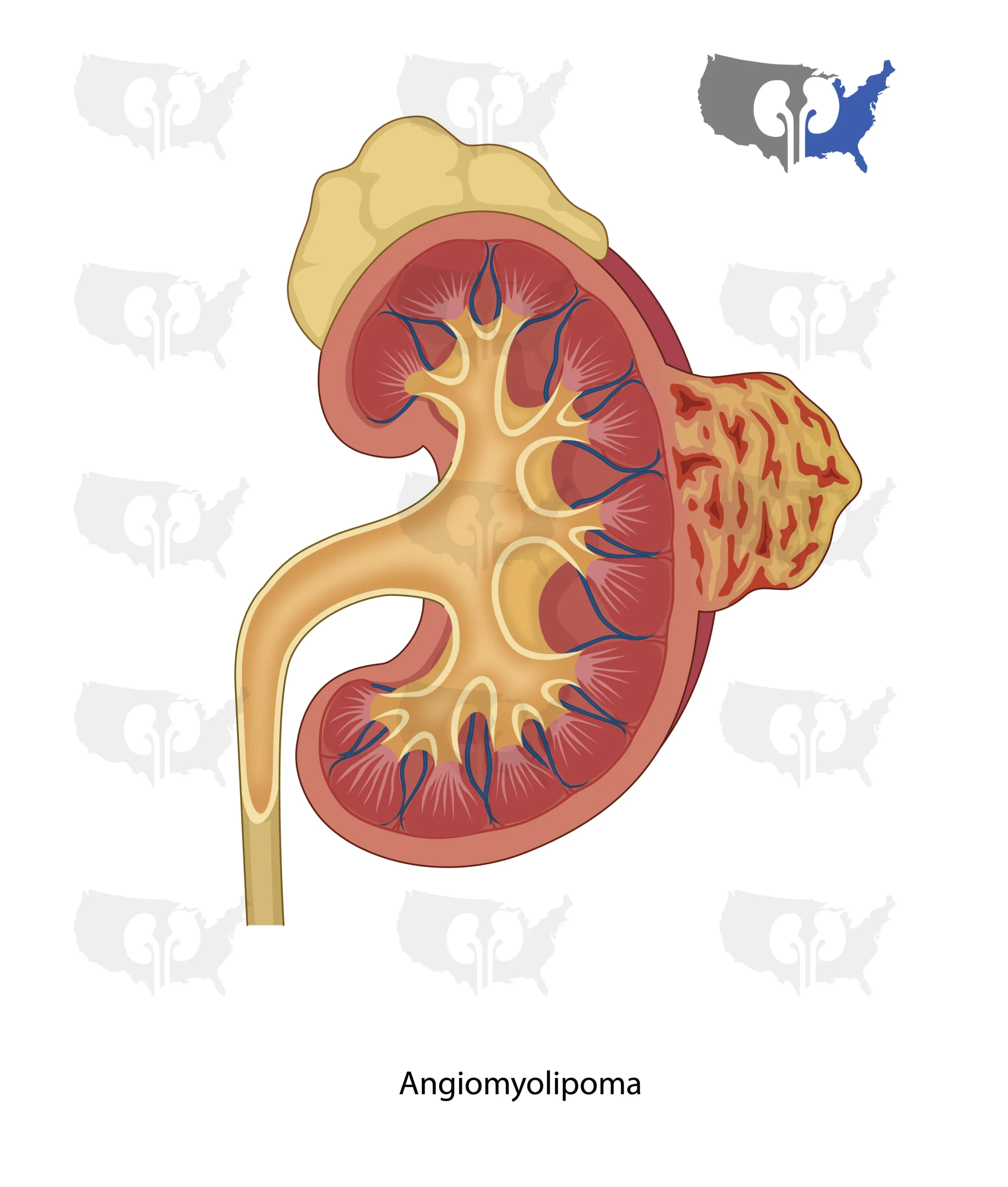
Renal angiomyolipoma is a benign (non-cancerous) tumor that develops in the kidney. It consists of three types of tissue: blood vessels (angio-), smooth muscle (myo-), and fat (lipoma). Although relatively rare, renal angiomyolipomas account for approximately 1-3% of all benign kidney tumors. They can occur in both men and women but are more common in women. While most cases are sporadic, some angiomyolipomas are associated with genetic conditions like tuberous sclerosis complex or lymphangioleiomyomatosis.
At Crossroads Urology, we provide expert care for the diagnosis and treatment of renal angiomyolipomas, ensuring personalized treatment plans for each patient.
Symptoms
Many renal angiomyolipomas are small and asymptomatic, meaning they do not cause noticeable symptoms. These are often discovered incidentally during imaging studies performed for unrelated reasons. When symptoms do occur, they may include:
- Blood in the urine (hematuria)
- Pain in the side or back (flank pain)
- A palpable mass in the abdomen
The primary concern with renal angiomyolipomas is the risk of bleeding due to abnormal blood vessels within the tumor. Larger tumors are more likely to cause significant bleeding, which can be life-threatening.
Diagnosis
To diagnose renal angiomyolipoma, providers at Crossroads Urology may perform several tests, including:
- Physical examination
- Blood tests
- Imaging studies such as ultrasound, CT scans, or MRI to differentiate angiomyolipomas from other kidney tumors
Treatment Options
Treatment for renal angiomyolipoma depends on factors such as the size and location of the tumor, as well as the patient’s overall health. Treatment options include:
- Active surveillance: If the tumor is small and asymptomatic, regular monitoring with imaging studies may be recommended to ensure the tumor does not grow or cause complications.
- Embolization: A minimally invasive procedure in which a catheter is used to inject materials that block the blood supply to the tumor, causing it to shrink.
- Surgery: For larger tumors, those causing symptoms, or those showing signs of growth, surgery may be necessary. Surgical options include partial nephrectomy (removal of the tumor and some surrounding kidney tissue) or, in rare cases, radical nephrectomy (removal of the entire kidney).
Expert Care at Crossroads Urology
If you have been diagnosed with a renal angiomyolipoma or are experiencing any related symptoms, consulting with Crossroads Urology is essential. Our team is experienced in managing renal angiomyolipomas, and we will guide you through the diagnostic and treatment process, ensuring the best possible outcome.