

Comprehensive Overview
Renal injury, also known as kidney injury, occurs when trauma or an accident damages one or both kidneys. These essential organs filter waste and excess fluids from the blood, producing urine. Renal injuries can range from minor contusions to severe damage requiring surgical intervention. Proper diagnosis and timely management are critical to preventing complications, such as internal bleeding, infection, or kidney failure.
At Crossroads Urology, we specialize in evaluating and treating renal injuries with a focus on preserving kidney function and ensuring optimal outcomes.
Classification of Renal Injuries
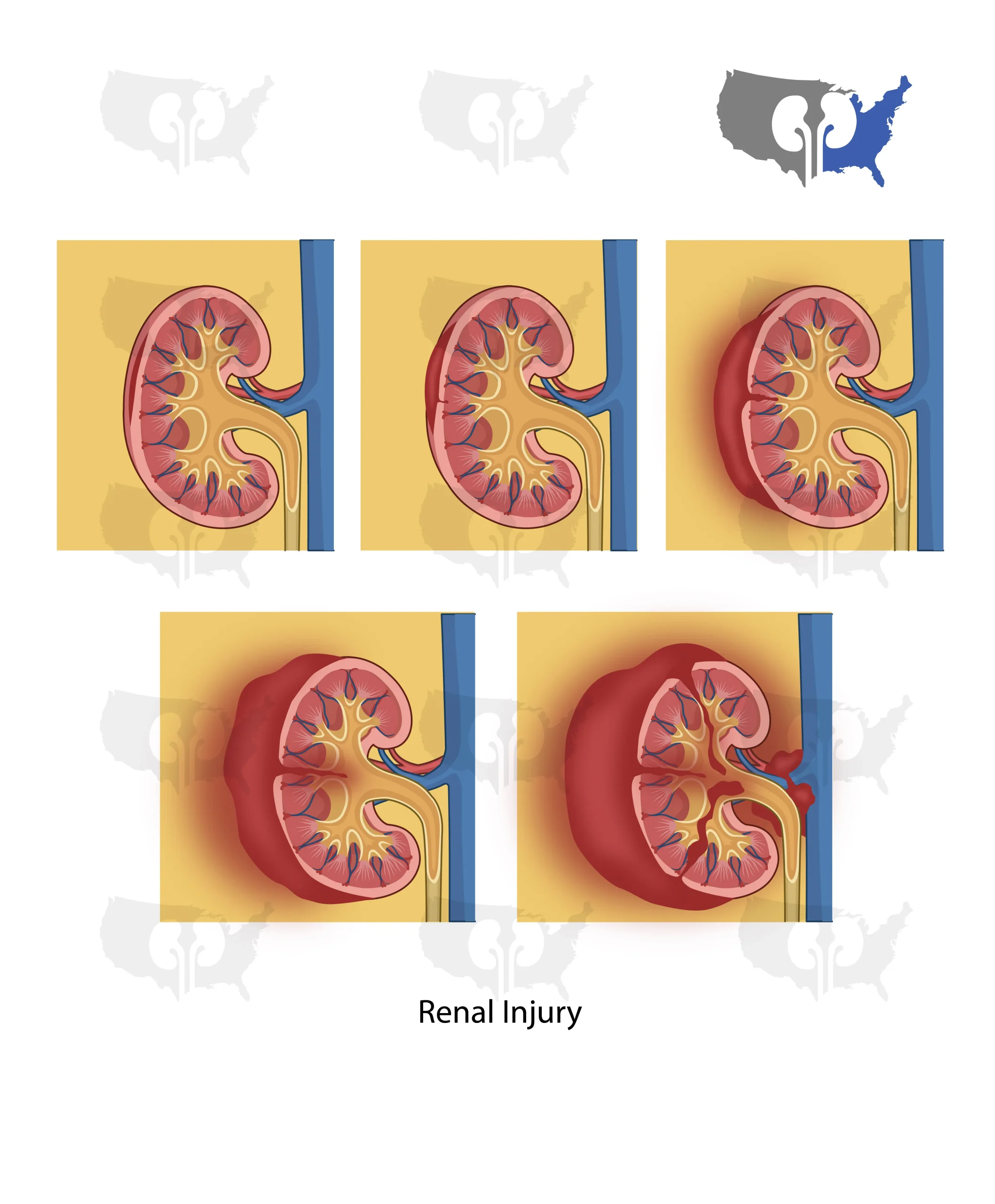
Renal injuries are classified into five grades based on severity:
- Grade I: Minor contusion or subcapsular hematoma without visible damage to the kidney.
- Grade II: Non-expanding hematoma or laceration less than 1 cm deep.
- Grade III: Laceration extending more than 1 cm but not involving the renal pelvis or medulla.
- Grade IV: Laceration involving the renal pelvis or injury to a major renal vessel.
- Grade V: Shattered kidney or complete avulsion of the renal hilum, resulting in loss of blood supply.
Symptoms of Renal Injury
- Flank or abdominal pain, particularly near the kidneys
- Blood in the urine (hematuria)
- Swelling or bruising in the back or abdomen
- Low blood pressure (hypotension)
- Signs of shock, such as rapid heartbeat, pale skin, or confusion
Diagnosis
Accurate diagnosis involves:
- Medical history and physical examination: To assess the mechanism of injury and symptoms.
- Imaging studies:
- Ultrasound or CT scan: To evaluate kidney structure and detect bleeding or damage.
- MRI: In select cases for detailed imaging.
Treatment Options
Management depends on the grade of injury and the patient’s stability:
- Grades I and II (Minor Injuries):
- Conservative treatment with bed rest and pain management.
- Monitoring of vital signs and kidney function.
- Most minor injuries heal without surgery.
- Grade III (Moderate Injuries):
- Initial conservative management similar to minor injuries.
- Closer monitoring with follow-up imaging to ensure healing.
- Grades IV and V (Severe Injuries):
- Surgical intervention to repair damage or control bleeding.
- In extreme cases, partial or complete nephrectomy (removal of the kidney) may be necessary.
Preventing Renal Injury
While accidents are not always avoidable, steps to protect kidney health include:
- Wearing seatbelts and using proper safety gear during high-risk activities.
- Seeking prompt care for symptoms of trauma to the abdomen or back.
Expert Care at Crossroads Urology
If you suspect a renal injury, visit the emergency department or consult a specialist promptly. At Crossroads Urology, our team provides expert evaluation, advanced diagnostics, and personalized treatment plans to ensure the best possible care for kidney injuries.