

Comprehensive Overview
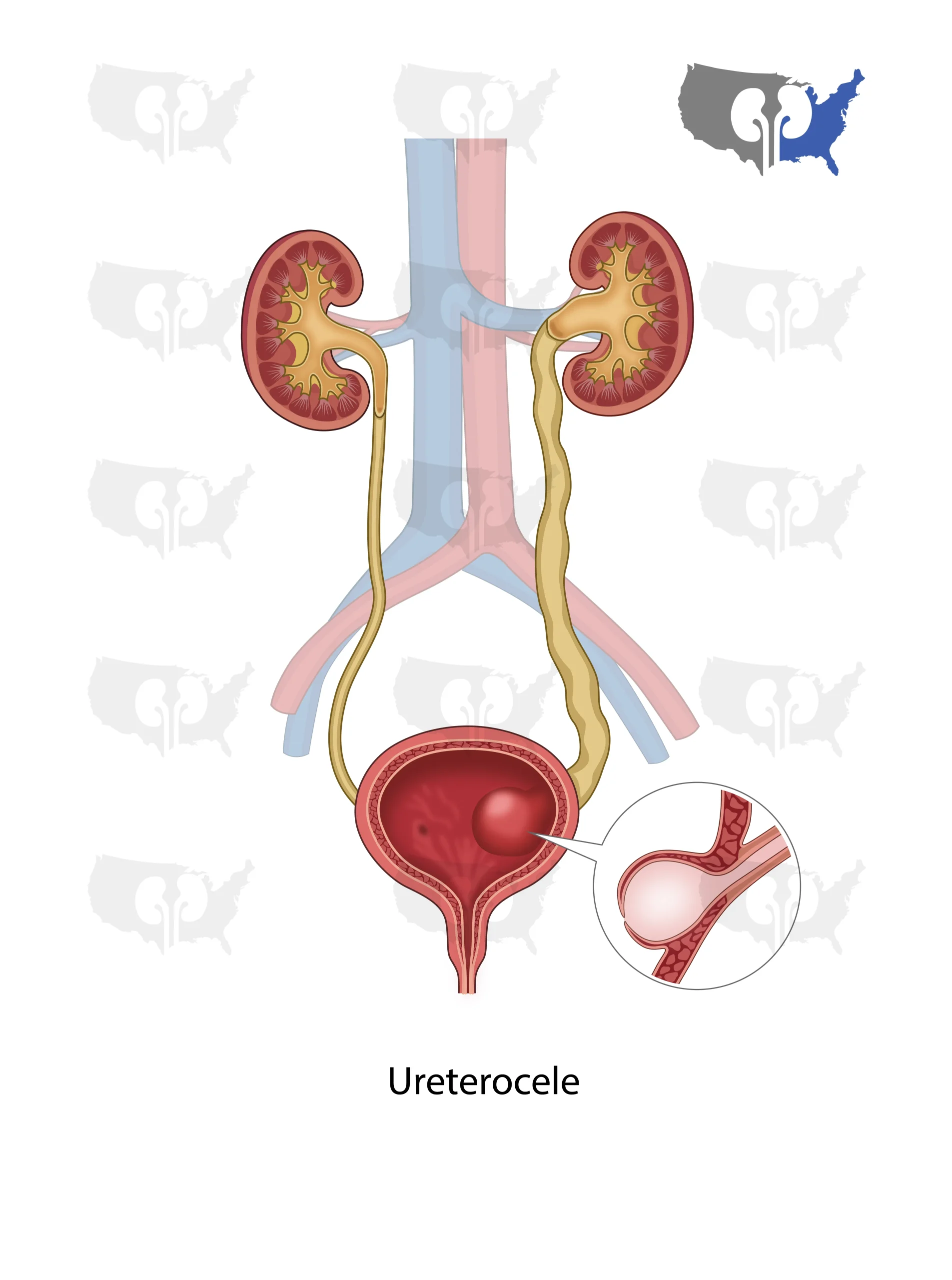
A ureterocele is a congenital condition in which a section of the ureter swells near its opening into the bladder, forming a balloon-like sac. This condition can disrupt the normal flow of urine, leading to urinary tract infections (UTIs), kidney damage, or other complications. At Crossroads Urology, we provide expert diagnosis and treatment for ureterocele to ensure optimal urinary tract health and function.
Symptoms of Ureterocele
- Recurrent urinary tract infections.
- Pain in the side (flank) or lower abdomen.
- Frequent or urgent need to urinate.
- Difficulty or pain during urination.
- Blood in the urine (hematuria).
- Inability to fully empty the bladder.
- Kidney stones.
In some cases, ureteroceles are detected before birth during a routine prenatal ultrasound. At Crossroads Urology, we specialize in identifying and managing ureterocele at any stage of life.
Causes and Risk Factors
Ureteroceles are congenital abnormalities, meaning they are present at birth. While the exact cause is not always clear, certain factors may contribute:
- Female gender: Ureteroceles are more common in females.
- Structural abnormalities of the urinary tract.
Our team at Crossroads Urology works closely with patients and families to assess risk factors and develop individualized care plans.
Diagnosis
Diagnosing ureterocele at Crossroads Urology involves:
- Medical history and physical exam: Understanding symptoms and evaluating the urinary system.
- Urinalysis and urine culture: To identify infection.
- Ultrasound imaging: Visualizing the kidneys, ureters, and bladder.
- Voiding cystourethrogram (VCUG): Assessing urine flow and bladder function.
- CT scan or intravenous pyelogram (IVP): Providing detailed images of the urinary tract.
Treatment Options
The approach to treating ureterocele depends on the severity, associated complications, and the patient’s age:
- Observation: For small, asymptomatic ureteroceles, regular monitoring may suffice.
- Antibiotics: Prescribed to treat or prevent UTIs.
- Catheterization: Temporary placement of a catheter to relieve urinary obstruction.
- Endoscopic surgery: A minimally invasive procedure to allow urine to drain more freely into the bladder.
- Reconstructive surgery: In severe cases, surgical repair of the affected ureter and kidney or removal of the ureterocele with reattachment of the ureter to the bladder.
At Crossroads Urology, we provide advanced surgical and non-surgical options tailored to each patient’s needs.
Preventing Complications
Early detection and treatment are essential to prevent complications such as kidney damage, recurrent infections, or urinary obstruction. Regular follow-ups at Crossroads Urology ensure ongoing monitoring and optimal care.
Expert Care at Crossroads Urology
If you or your child is experiencing symptoms of ureterocele or has been diagnosed with this condition, the specialists at Crossroads Urology are here to help. Contact us today to schedule a consultation and explore the best treatment options for your needs.