

Comprehensive Overview
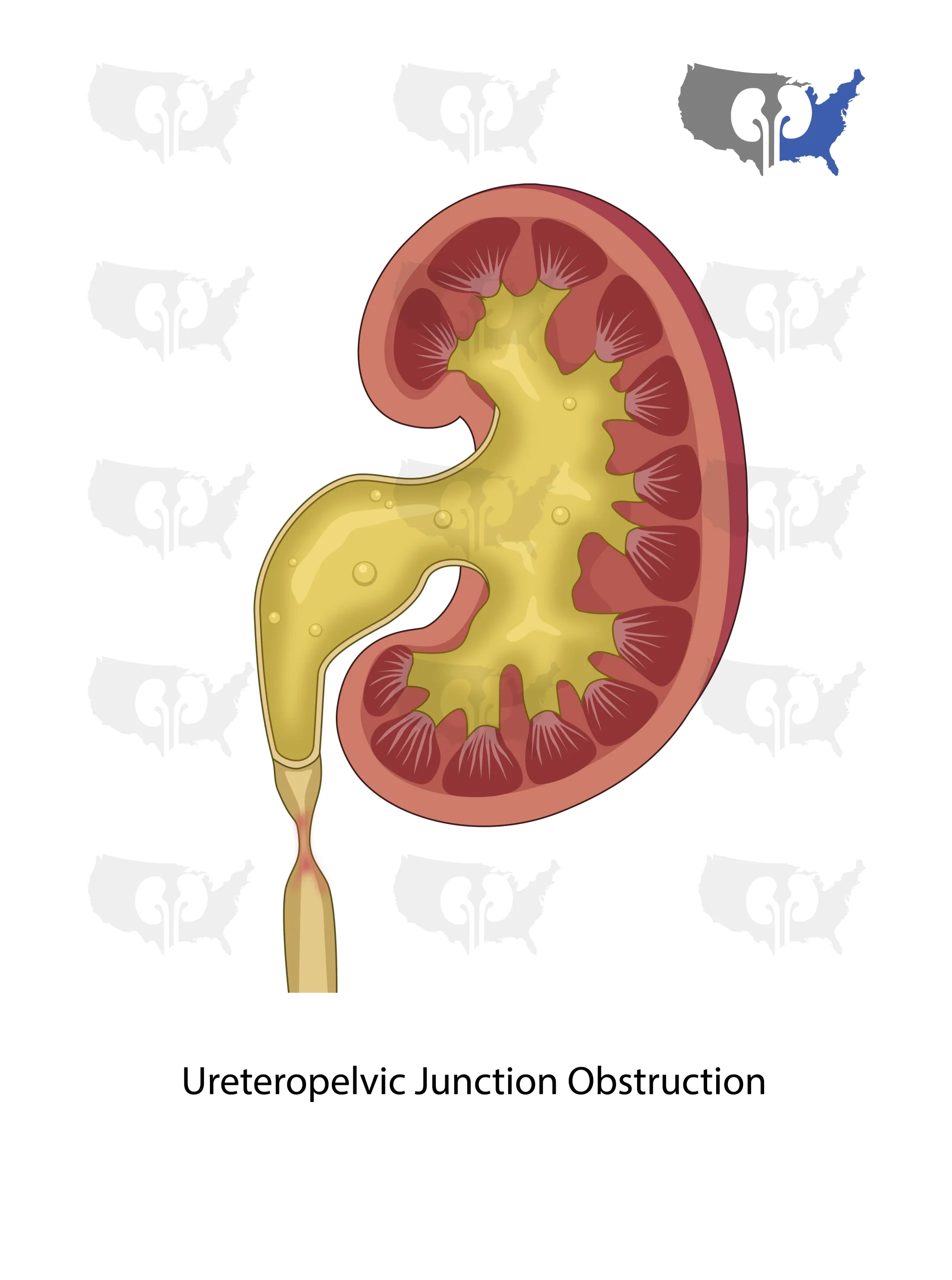
Ureteropelvic Junction (UPJ) obstruction occurs when the flow of urine from the kidney to the bladder is partially or completely blocked at the junction where the ureter meets the renal pelvis. This condition can lead to kidney swelling (hydronephrosis), pain, and potential kidney damage if untreated. At Crossroads Urology, we provide expert diagnosis and advanced treatment options to manage UPJ obstruction effectively and preserve kidney health.
Symptoms of UPJ Obstruction
- Pain in the abdomen or flank.
- Blood in the urine (hematuria).
- Recurrent urinary tract infections (UTIs).
- Kidney stones.
- Poor weight gain or a palpable mass in infants.
Some cases of UPJ obstruction are asymptomatic and detected incidentally during imaging studies. At Crossroads Urology, we use state-of-the-art diagnostic techniques to identify and assess this condition accurately.
Causes and Risk Factors
UPJ obstruction can occur due to several factors, including:
- Congenital abnormalities: The most common cause, where the ureter is narrowed or has poor muscle tone.
- Abnormal blood vessels: Compression of the ureter by nearby blood vessels.
- Inflammatory or fibrotic conditions: Scarring or inflammation at the UPJ.
- Kidney stones: Obstructing urine flow at the UPJ.
Our specialists at Crossroads Urology evaluate each patient thoroughly to determine the underlying cause and tailor the treatment plan accordingly.
Diagnosis
Diagnosing UPJ obstruction at Crossroads Urology involves:
- Medical history and physical examination: Understanding symptoms and risk factors.
- Ultrasound imaging: To visualize kidney swelling and evaluate urine flow.
- CT scan or intravenous pyelogram (IVP): Providing detailed images of the urinary tract.
- Diuretic renogram: A nuclear medicine test to assess kidney function and urine flow.
Treatment Options
Treatment for UPJ obstruction depends on its severity, symptoms, and impact on kidney function:
- Observation: Mild cases with no significant symptoms or kidney damage may only require regular monitoring with imaging studies.
- Pyeloplasty: The most common surgical procedure, involving the removal of the obstructed section of the ureter and reconnection to the renal pelvis. This can be performed using minimally invasive techniques, such as laparoscopic or robot-assisted surgery.
- Endoscopic procedures: Techniques like balloon dilation or laser incision to open the obstruction and improve urine flow.
- Temporary measures: Placement of a ureteral stent or nephrostomy tube to relieve obstruction until definitive treatment is performed.
At Crossroads Urology, we prioritize minimally invasive techniques and personalized care to achieve the best outcomes for our patients.
Preventing Complications
Early detection and treatment of UPJ obstruction are crucial to prevent complications such as kidney infections, chronic pain, or irreversible kidney damage. Regular follow-ups at Crossroads Urology ensure ongoing monitoring and effective management.
Expert Care at Crossroads Urology
If you or your child is experiencing symptoms of UPJ obstruction or has been diagnosed with this condition, the experienced team at Crossroads Urology is here to help. Contact us today to schedule a consultation and learn more about our advanced diagnostic and treatment options.