

Comprehensive Overview
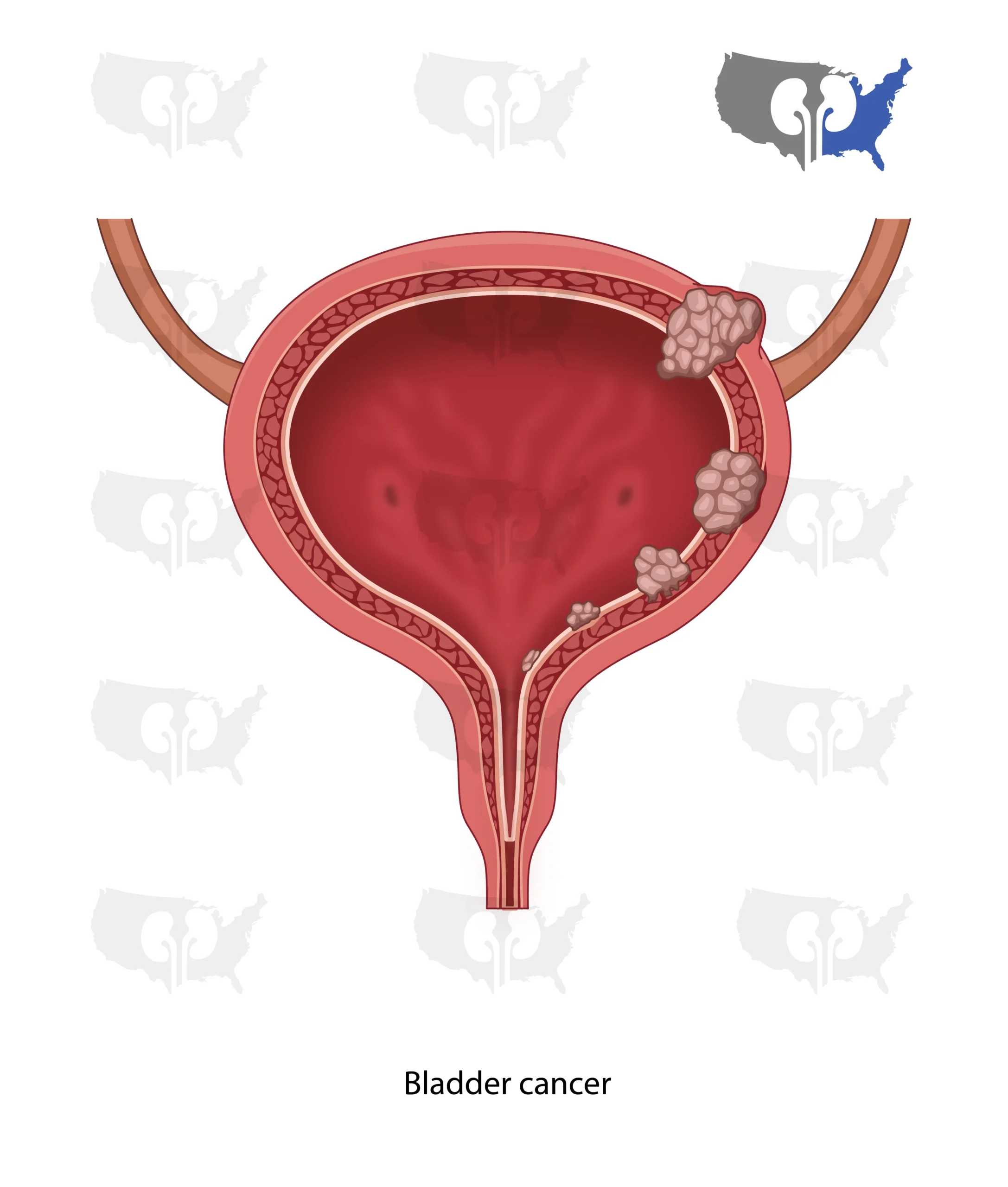
Bladder cancer develops in the cells lining the bladder, a hollow organ in the lower abdomen responsible for storing urine. It is the fourth most common cancer in men and less common in women. Early detection is critical for successful treatment and long-term outcomes.
At Crossroads Urology, we provide comprehensive diagnostic services and cutting-edge treatments for bladder cancer, offering personalized care at every stage of the disease.
Symptoms of Bladder Cancer
Symptoms of bladder cancer may include:
- Blood in the urine (hematuria), which may cause the urine to appear pink, red, or dark brown
- Frequent urination
- Painful urination (dysuria)
- Urgent need to urinate
- Lower back pain on one side
- Unintentional weight loss
- Fatigue
Risk Factors
Several risk factors are associated with bladder cancer, including:
- Age: Bladder cancer risk increases with age, with most cases diagnosed in individuals over 55.
- Smoking: Tobacco use is a major risk factor, as harmful chemicals in smoke accumulate in the urine, damaging the bladder lining.
- Chemical exposure: Working in industries such as rubber, leather, textile, and paint can increase the risk.
- Chronic bladder inflammation: Recurrent urinary infections or long-term use of urinary catheters can raise the risk.
- Family history: A family history of bladder cancer can elevate your risk.
Diagnosis
To diagnose bladder cancer, Crossroads Urology offers a range of diagnostic services, including:
- Urine tests: To check for blood or abnormal cells.
- Cystoscopy: A procedure that uses a thin camera (cystoscope) to examine the inside of the bladder.
- Biopsy: A small tissue sample may be collected for further examination.
- Imaging studies: CT scans or MRIs may be used to assess the bladder and surrounding organs.
Treatment Options
Treatment for bladder cancer depends on the stage and aggressiveness of the cancer. Options include:
- Surgery: Removing the cancerous tissue or the entire bladder (cystectomy) in more advanced cases.
- Immunotherapy: Using treatments such as Bacillus Calmette-Guerin (BCG) therapy or immune checkpoint inhibitors to stimulate the body’s immune system to fight cancer cells.
- Chemotherapy: Anti-cancer drugs can be used before surgery to shrink tumors or after surgery to kill remaining cancer cells.
- Radiation therapy: High-energy rays or particles may be used to destroy cancer cells, often in combination with chemotherapy.
- Intravesical therapy: Medications placed directly into the bladder (chemotherapy or immunotherapy agents) can be effective for early-stage bladder cancer.
Preventing Bladder Cancer
There are steps you can take to reduce your risk of developing bladder cancer, including:
- Stop smoking and avoid exposure to secondhand smoke.
- Limit exposure to workplace chemicals by following safety guidelines and using protective equipment.
- Drink plenty of fluids, particularly water, to help flush out harmful substances from the bladder.
- Maintain a healthy diet rich in fruits, vegetables, and whole grains, and low in saturated fats.
- Engage in regular physical activity to support overall health.
Partnering with Crossroads Urology
If you are concerned about bladder cancer or are experiencing any symptoms, it’s essential to consult with Crossroads Urology. Our dedicated team offers expert guidance, cutting-edge treatment options, and compassionate care to ensure the best possible outcomes for every patient.