
Comprehensive Overview
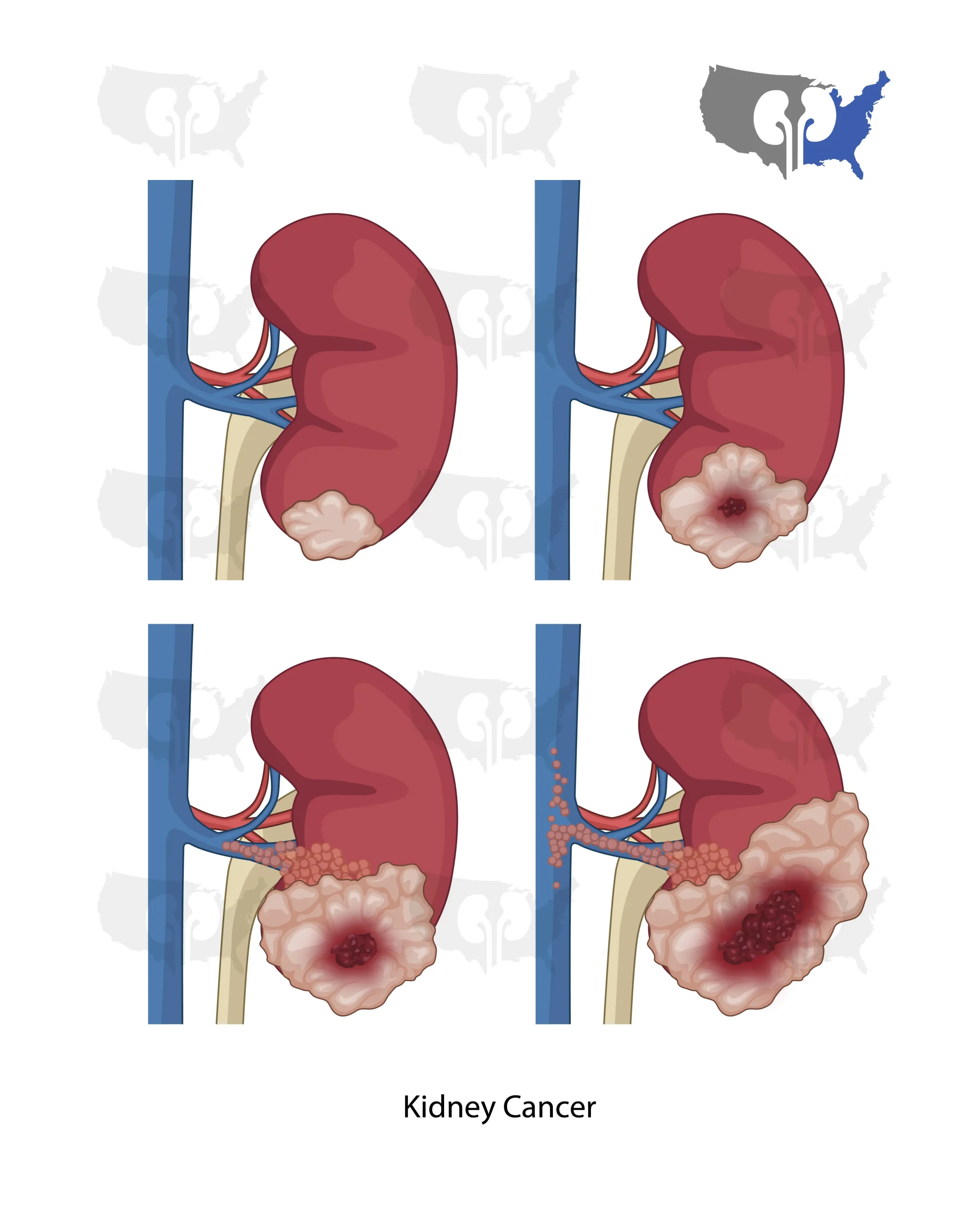
Kidney cancer, also known as renal cell carcinoma (RCC), is a type of cancer that begins in the kidneys. The kidneys are responsible for filtering waste from the blood and producing urine. Kidney cancer is one of the more common cancers in adults, and early detection is key to successful treatment.
At Crossroads Urology, we provide expert care in the diagnosis and treatment of kidney cancer, offering advanced treatment options tailored to each patient’s unique needs.
Types of Kidney Cancer
- Renal Cell Carcinoma (RCC): The most common type of kidney cancer, RCC begins in the cells that line the small tubes inside the kidney.
- Transitional Cell Carcinoma (TCC): A less common type of kidney cancer that begins in the cells lining the renal pelvis (where the kidney meets the ureter).
- Wilms Tumor: A rare type of kidney cancer that primarily affects children.
- Renal Sarcoma: A rare form of cancer that begins in the connective tissue of the kidney.
Symptoms of Kidney Cancer
In its early stages, kidney cancer may not cause noticeable symptoms. However, as the tumor grows, symptoms may include:
- Blood in the urine (hematuria)
- Persistent pain in the side or lower back (flank pain)
- Unexplained weight loss
- Fatigue
- Loss of appetite
- A lump or mass in the abdomen or side
- Fever not associated with infection
Risk Factors for Kidney Cancer
Several factors may increase the risk of developing kidney cancer, including:
- Smoking: Cigarette smoking is a major risk factor for kidney cancer.
- Obesity: Excess body weight has been linked to an increased risk of kidney cancer.
- High blood pressure: Hypertension can increase the risk of developing kidney cancer.
- Family history: A family history of kidney cancer may elevate the risk.
- Occupational exposure: Exposure to certain chemicals, such as asbestos or cadmium, can increase the risk of kidney cancer.
- Genetic conditions: Certain hereditary conditions, such as von Hippel-Lindau disease, increase the likelihood of kidney cancer.
Diagnosis
At Crossroads Urology, diagnosing kidney cancer involves a combination of tests and imaging studies, including:
- Urinalysis and blood tests: To check for blood in the urine and assess kidney function.
- Imaging studies: Ultrasound, CT scan, or MRI to visualize the kidney and detect tumors.
- Biopsy: In some cases, a biopsy may be performed to obtain a tissue sample for analysis.
Treatment Options
The treatment of kidney cancer depends on the stage of the cancer, the size of the tumor, and the patient’s overall health. Common treatment options include:
- Surgery: The most common treatment for kidney cancer. Options include:
- Partial nephrectomy: Removal of the tumor and a small portion of healthy tissue surrounding it.
- Radical nephrectomy: Removal of the entire kidney, along with nearby tissue or lymph nodes if necessary.
- Targeted therapy: Drugs that specifically target cancer cells to block their growth and spread, often used for advanced kidney cancer.
- Immunotherapy: Treatments that stimulate the body’s immune system to attack cancer cells.
- Radiation therapy: High-energy rays used to destroy cancer cells, though it is less commonly used for kidney cancer.
- Ablation: Techniques such as cryoablation or radiofrequency ablation can be used to destroy small tumors using extreme cold or heat.
Expert Care at Crossroads Urology
If you have been diagnosed with kidney cancer or are experiencing symptoms, it is important to consult with Crossroads Urology. Our team provides personalized care, offering advanced treatment options to ensure the best possible outcomes for our patients.