

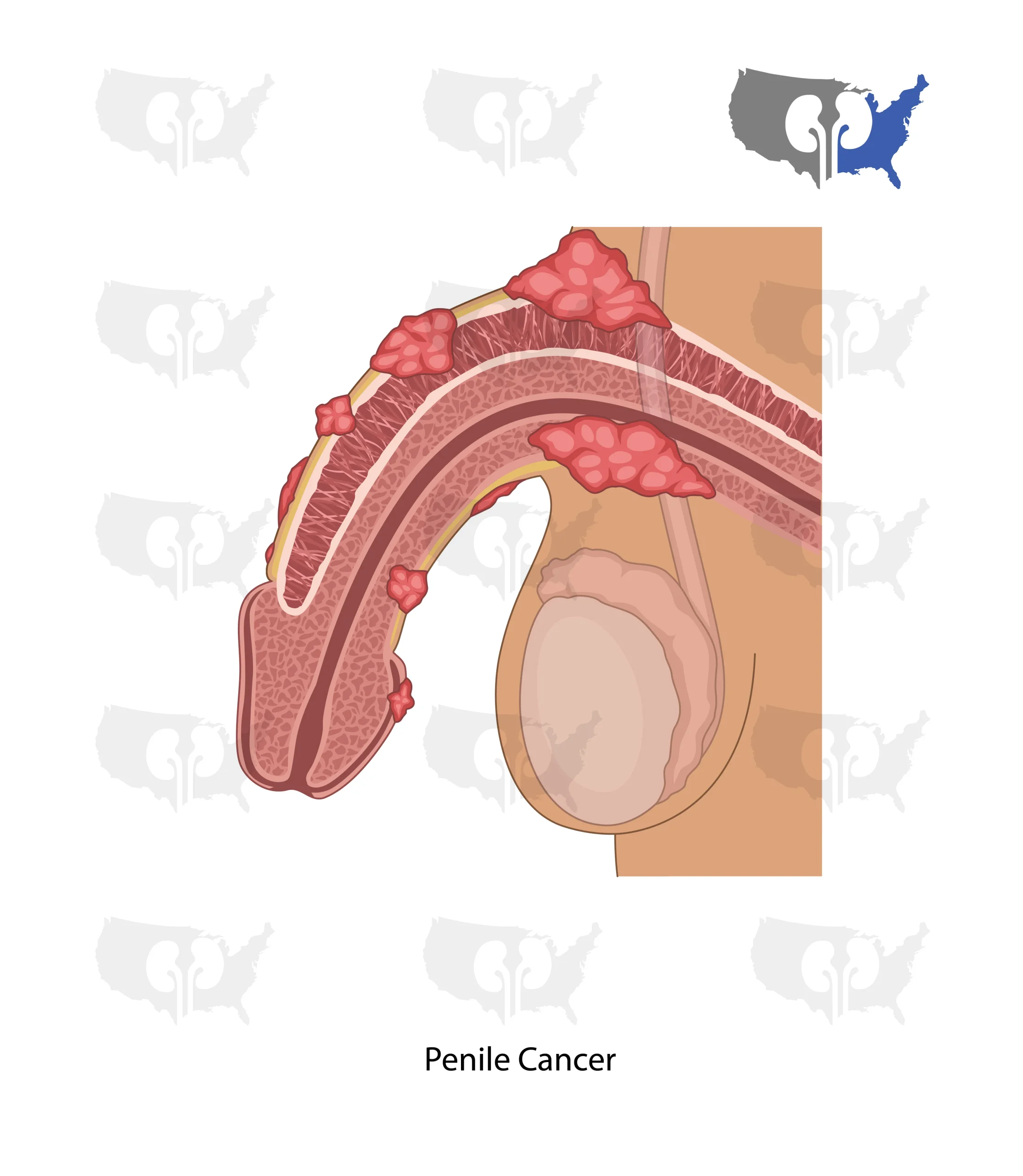
Comprehensive Overview
Penile cancer is a rare type of cancer that affects the tissues and skin of the penis. Though uncommon, penile cancer can be life-threatening if not detected and treated early. Awareness of its risk factors, symptoms, and treatment options is crucial for early intervention and improved outcomes.
At Crossroads Urology, we specialize in diagnosing and treating penile cancer, providing compassionate and personalized care to our patients.
Risk Factors for Penile Cancer
- Age: Most cases occur in men over 60.
- Human papillomavirus (HPV) infection: Certain strains of HPV increase the risk of penile cancer.
- Smoking: Tobacco use can harm the penile tissue, increasing cancer risk.
- Phimosis: Difficulty retracting the foreskin can lead to inflammation and poor hygiene.
- Poor hygiene: Inadequate genital hygiene increases the likelihood of infections and chronic irritation, contributing to cancer risk.
- Circumcision status: Men who are uncircumcised may have a higher risk due to foreskin-related infections and hygiene challenges.
Symptoms of Penile Cancer
- A lump, growth, or lesion on the penis
- Changes in the skin’s color, texture, or thickness
- A non-healing sore or ulcer on the penis
- Unusual discharge or bleeding
- Swelling in the groin due to enlarged lymph nodes
Diagnosis
Diagnosing penile cancer involves a comprehensive evaluation, including:
- Medical history and physical examination: To assess symptoms and potential risk factors.
- Biopsy: A sample of the affected tissue is examined under a microscope to confirm cancer.
- Imaging studies: Ultrasound, CT scans, or MRI may be used to determine the extent of the disease.
Treatment Options
The treatment plan depends on the stage of cancer, the size and location of the tumor, and the patient’s overall health. Options include:
- Surgery: The primary treatment for penile cancer, which may involve:
- Excisional biopsy: Removal of the tumor and some surrounding tissue.
- Partial or total penectomy: Removal of part or all of the penis in advanced cases.
- Radiation therapy: High-energy rays are used to destroy cancer cells, often as an alternative or adjunct to surgery.
- Chemotherapy: Systemic or localized use of drugs to kill cancer cells.
- Immunotherapy: Boosts the immune system to fight cancer.
Prevention and Early Detection
- Practice good genital hygiene: Regular cleaning reduces the risk of infection and irritation.
- HPV vaccination: Protects against high-risk strains of HPV linked to penile cancer.
- Circumcision: May lower the risk of penile cancer by improving hygiene and reducing infections.
- Regular self-examinations: Helps detect early changes in the penile tissue.
Expert Care at Crossroads Urology
If you notice any symptoms of penile cancer or have concerns about your risk, consult with the specialists at Crossroads Urology. Early detection and treatment are critical for achieving the best possible outcomes, and our experienced team is here to guide you every step of the way.