

Comprehensive Overview
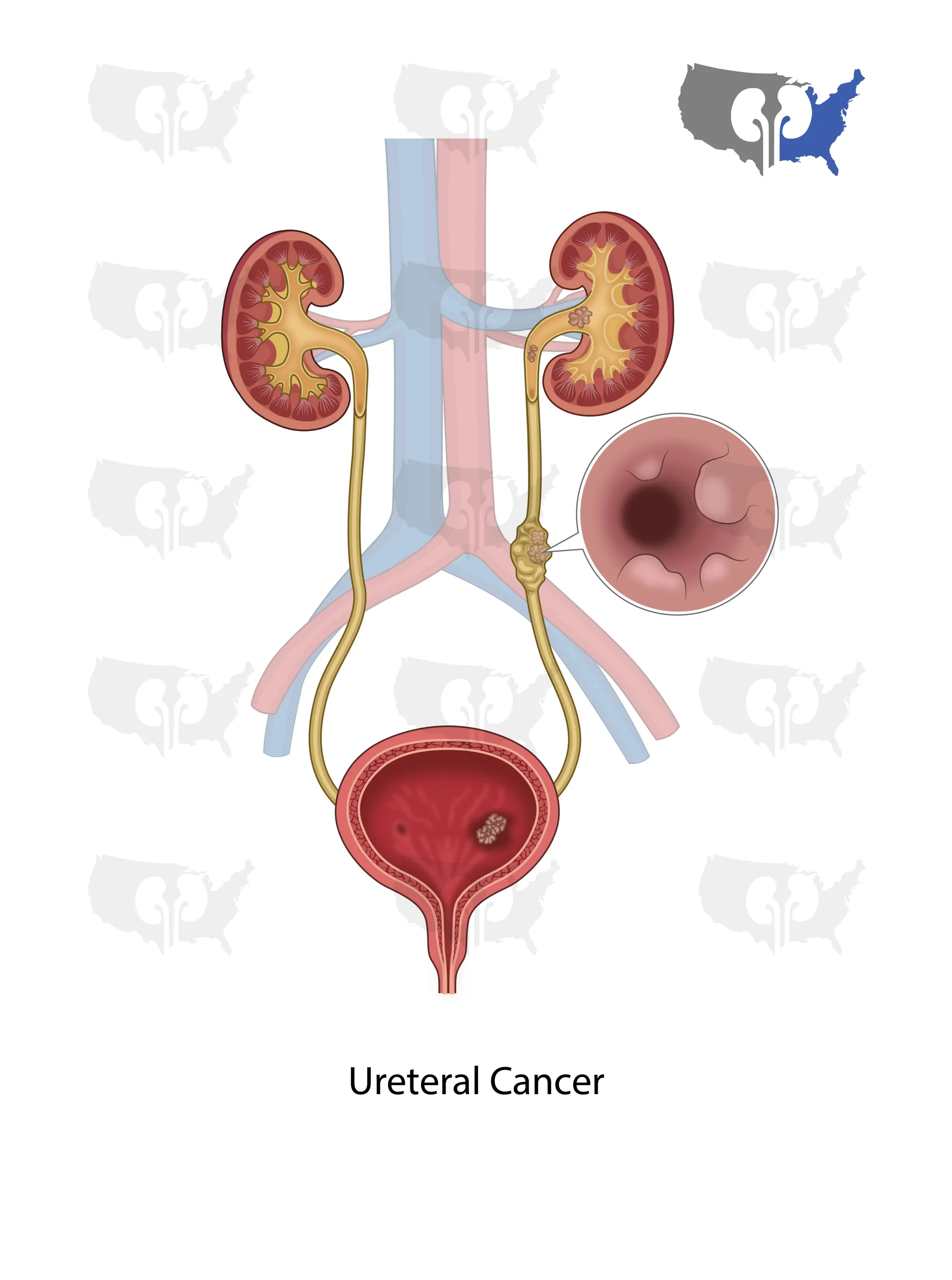
Ureteral cancer is a rare type of cancer that develops in the ureters, the tubes that transport urine from the kidneys to the bladder. Most ureteral cancers are transitional cell carcinomas (TCC), originating from the urothelial cells lining the ureters. While uncommon, early diagnosis is essential to improve outcomes. At Crossroads Urology, we offer expert care and personalized treatment for ureteral cancer, providing patients with the highest level of support throughout their journey.
Symptoms of Ureteral Cancer
- Blood in the urine (hematuria), which may appear pink, red, or dark brown.
- Pain in the side, back, or abdomen, resembling kidney stone pain.
- Frequent or painful urination.
- Unexplained weight loss or fatigue.
If you experience any of these symptoms, contact Crossroads Urology for a thorough evaluation and expert guidance.
Causes and Risk Factors
The exact cause of ureteral cancer is not fully understood, but several factors can increase risk:
- Age: Most cases occur in individuals aged 60 or older.
- Gender: Men are at higher risk than women.
- Smoking: Tobacco use significantly increases the likelihood of developing urothelial cancers.
- Chemical exposure: Prolonged exposure to certain chemicals, such as those in the dye or rubber industries, can elevate risk.
- History of bladder cancer: A previous diagnosis of bladder cancer increases the likelihood of ureteral cancer.
At Crossroads Urology, we consider these factors during your evaluation and tailor screenings to your individual risk profile.
Diagnosis
Diagnosing ureteral cancer at Crossroads Urology involves:
- Medical history and physical examination: Understanding your symptoms and overall health.
- Imaging studies: Ultrasound, CT scans, or MRIs to visualize the ureters and identify abnormalities.
- Ureteroscopy: A minimally invasive procedure using a thin, flexible scope to examine the ureters and collect tissue samples for biopsy.
Our state-of-the-art diagnostic tools ensure accurate results and a comprehensive understanding of your condition.
Treatment Options
Treatment for ureteral cancer depends on the stage, location, and overall health of the patient:
- Surgery:
- Removal of the tumor or affected portion of the ureter.
- In advanced cases, removal of the kidney and surrounding tissue (nephroureterectomy).
- Chemotherapy: Administered before or after surgery to destroy cancer cells or prevent recurrence.
- Radiation therapy: Used in conjunction with other treatments to target and eliminate cancer cells.
- Intravesical therapy: Medications delivered directly into the bladder or ureter for early-stage cancer.
At Crossroads Urology, we collaborate with a multidisciplinary team to develop personalized treatment plans that address your specific needs.
Preventing Ureteral Cancer
While not all cases are preventable, certain steps can reduce your risk:
- Limit contact with harmful chemicals by following safety guidelines at work.
- Stay hydrated to help flush toxins from the urinary tract.
Expert Care at Crossroads Urology
At Crossroads Urology, we understand the challenges of a ureteral cancer diagnosis and are dedicated to providing compassionate, expert care. From diagnosis to treatment, our team works closely with patients to ensure the best possible outcomes. If you are experiencing symptoms or have concerns about ureteral cancer, contact us today to schedule a consultation.