
Introduction
A whole-body bone scan is a nuclear imaging test that detects abnormalities in the bones, including fractures, infections, and metastases from cancers such as prostate or bladder cancer. This sensitive diagnostic tool helps evaluate bone health and identify conditions that may not be visible on traditional X-rays. At Crossroads Urology, we offer bone scans as part of our comprehensive cancer and bone health diagnostics.
Purpose
Whole-body bone scans are used to:
- Detect bone metastases in patients with urologic cancers like prostate or bladder cancer.
- Identify fractures or bone injuries that are difficult to see on X-rays.
- Evaluate bone infections (osteomyelitis) or unexplained bone pain.
- Monitor the progression of bone-related conditions or effectiveness of treatments.
Procedure
During a whole-body bone scan:
- A small amount of a radioactive tracer is injected into a vein, which accumulates in areas of increased bone activity.
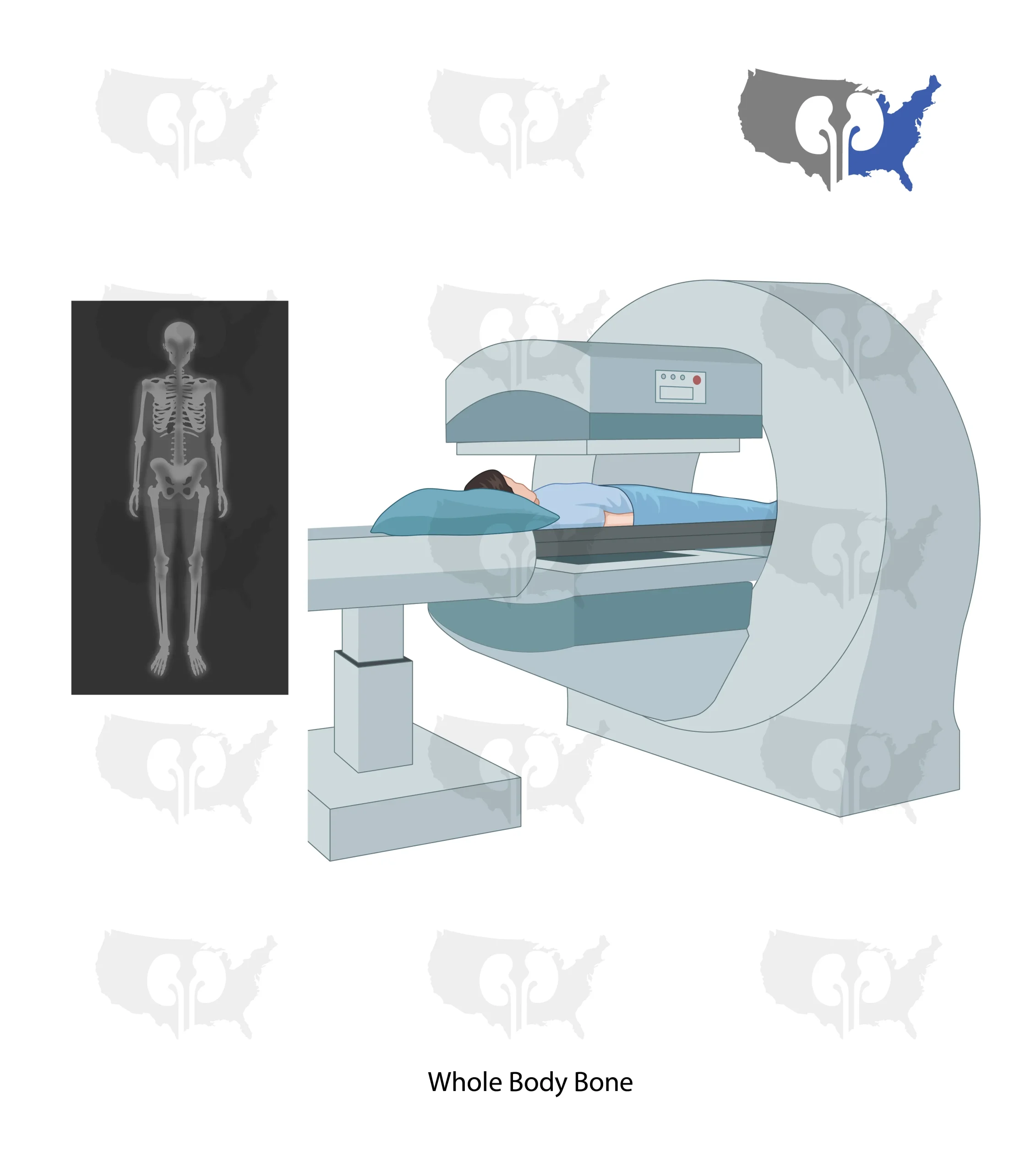
- After a waiting period (usually 2-4 hours), the patient lies on a scanning table.
- A gamma camera scans the entire body, capturing images of tracer uptake in the bones.
The entire imaging process typically takes 30-60 minutes and is painless.
Preparation
- Hydrate well before the procedure to help distribute the tracer evenly and flush out excess tracer after the scan.
- Remove metal objects such as jewelry, as they may interfere with imaging.
Risks and Considerations
- The radioactive tracer is very safe, with minimal exposure to radiation comparable to that of standard X-rays.
- Rarely, some patients may experience mild allergic reactions to the tracer.
At Crossroads Urology, our skilled team ensures the procedure is safe, comfortable, and precise.
Results
- Abnormal tracer uptake indicates areas of increased bone activity, which may signify cancer, infection, or other conditions.
- Results are interpreted by a radiologist and reviewed with the patient during a follow-up visit to discuss next steps.
Conclusion
A whole-body bone scan is an essential tool in evaluating bone health and detecting metastatic disease in urologic cancer patients. At Crossroads Urology, we provide expert diagnostics with a patient-centered approach to care. Contact us today to learn more about whole-body bone scans and schedule your consultation.