

Comprehensive Overview
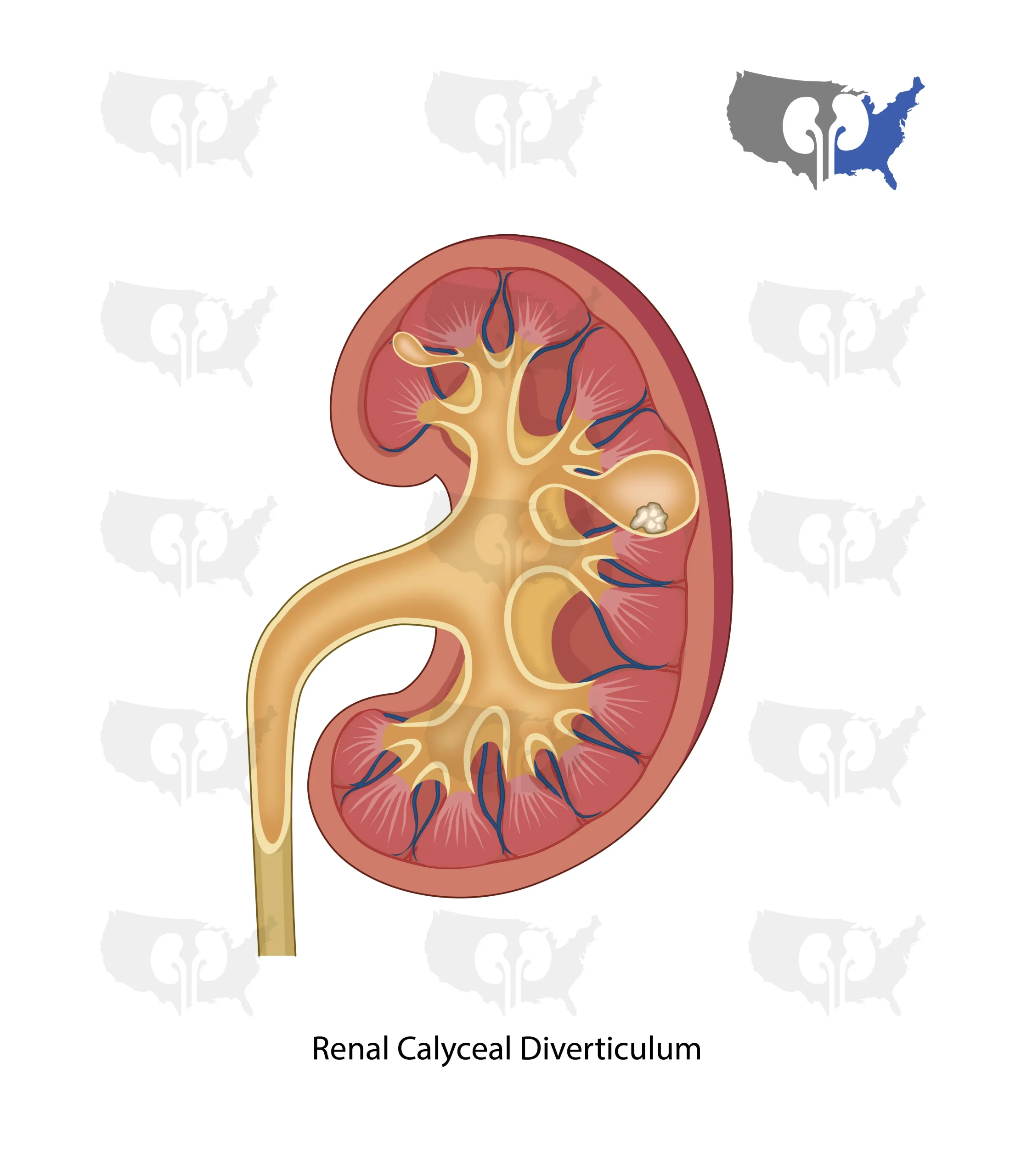
Renal calyceal diverticulum is a rare condition characterized by small, sac-like pouches or diverticula that develop in the kidney’s collecting system. These pouches connect to the renal calyces cup-shaped structures that transport urine from the kidney to the ureter. While often asymptomatic, renal calyceal diverticula can increase the risk of complications such as infection, kidney stones, or urinary discomfort.
At Crossroads Urology, we specialize in diagnosing and managing renal calyceal diverticula to prevent complications and improve patient outcomes.
Symptoms of Renal Calyceal Diverticulum
While many individuals with this condition are asymptomatic, symptoms may include:
- Flank pain or discomfort in the area of the affected kidney
- Blood in the urine (hematuria)
- Recurrent urinary tract infections (UTIs)
- Kidney stones
Causes and Risk Factors
Renal calyceal diverticula can result from:
- Congenital abnormalities: Malformations present at birth.
- Acquired factors: Infections, trauma, or conditions that increase urinary pressure.
Diagnosis
Diagnosing renal calyceal diverticulum involves:
- Medical history and symptom discussion.
- Imaging tests:
- Ultrasound or CT scans: To visualize the diverticulum and detect stones or infections.
- Intravenous pyelogram (IVP): To assess urine flow and identify structural abnormalities.
Treatment Options
Treatment depends on symptom severity and associated complications:
- Observation:
- Asymptomatic cases may require monitoring rather than immediate treatment.
- Antibiotics:
- Prescribed for infections to manage symptoms and prevent recurrence.
- Percutaneous drainage:
- A minimally invasive procedure to drain urine and relieve symptoms in symptomatic or infected cases.
- Shockwave lithotripsy (SWL):
- Used to break up kidney stones within the diverticulum for easier passage.
- Ureteroscopy with balloon dilation:
- Enhances urine flow by dilating the neck of the diverticulum.
- Surgery:
- Diverticulectomy: Removal of the diverticulum in severe or recurrent cases.
Expert Care at Crossroads Urology
If you are concerned about renal calyceal diverticulum, trust the specialists at Crossroads Urology. Our team offers comprehensive diagnostic evaluations and personalized treatment plans to ensure optimal urinary health.