

Introduction
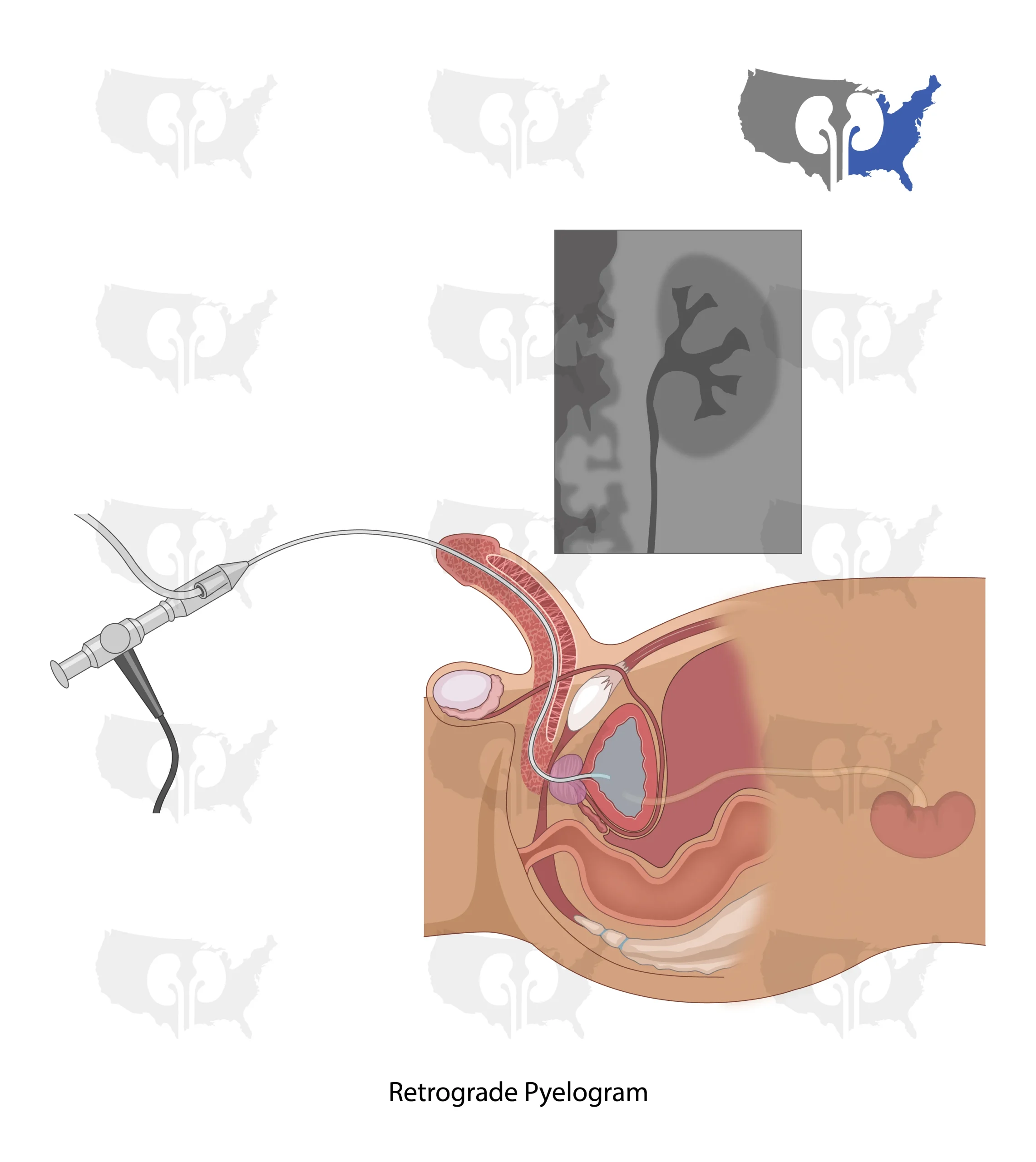
A retrograde pyelogram is a diagnostic imaging procedure that uses contrast dye to visualize the ureters and kidneys. This minimally invasive technique is often performed during cystoscopy to identify urinary obstructions, strictures, or stones. At Crossroads Urology, we use retrograde pyelograms to provide detailed and accurate evaluations of the upper urinary tract.
Purpose
Retrograde pyelograms are performed to:
- Diagnose blockages, strictures, or stones in the ureters or renal pelvis.
- Identify abnormalities in the urinary tract, such as tumors or congenital anomalies.
- Guide treatment planning for urologic conditions.
Procedure
During the retrograde pyelogram:
- The patient is placed under local or general anesthesia, depending on the clinical scenario.
- A cystoscope is inserted through the urethra to access the bladder.
- A thin catheter is advanced through the ureter and into the renal pelvis.
- Contrast dye is injected, and X-ray images are captured to visualize the urinary tract.
The procedure typically takes 30-60 minutes and is often combined with therapeutic interventions if abnormalities are detected.
Preparation
- Fasting may be required prior to the procedure if general anesthesia is used.
- Inform the provider of any allergies, especially to iodine-based contrast agents.
- Patients may be asked to stop certain medications, such as blood thinners, before the procedure.
Risks and Considerations
While generally safe, potential risks include:
- Temporary discomfort during catheter placement.
- Rare allergic reactions to contrast dye.
- Minimal risk of infection or injury to the ureter.
At Crossroads Urology, we take every precaution to minimize risks and ensure patient comfort.
Results
- Images are immediately reviewed to assess the urinary tract’s structure and detect any abnormalities.
- Results are discussed with the patient, and a personalized treatment plan is developed if necessary.
Conclusion
Retrograde pyelograms provide a clear and detailed view of the urinary tract, aiding in the diagnosis and treatment of urologic conditions. At Crossroads Urology, we deliver expert care using advanced diagnostic tools to ensure accurate and effective evaluations. Contact us today to learn more about retrograde pyelograms and schedule your consultation.