
Comprehensive Overview
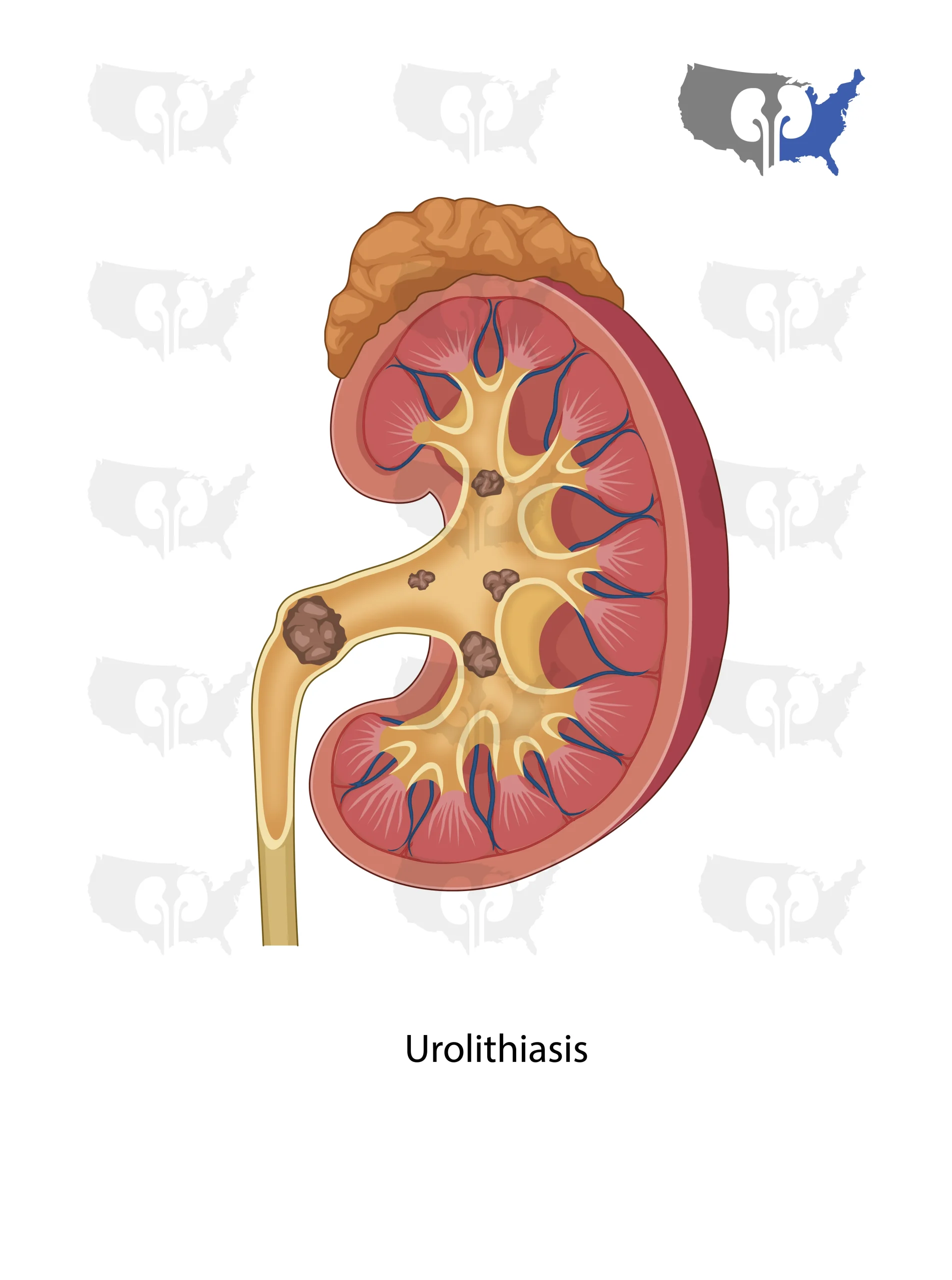
Urolithiasis, commonly known as kidney stones, occurs when mineral and salt deposits form in the kidneys. These stones can vary in size and cause significant pain as they pass through the urinary tract. At Crossroads Urology, we provide expert diagnosis and advanced treatment options to manage kidney stones and prevent recurrence.
Symptoms of Urolithiasis
- Severe pain in the side, back, or lower abdomen, often radiating to the groin.
- Nausea and vomiting.
- Blood in the urine (hematuria).
- Frequent or painful urination.
- Cloudy or foul-smelling urine.
- Difficulty passing urine or reduced urine output.
If you experience these symptoms, the specialists at Crossroads Urology are here to help with prompt evaluation and effective management.
Causes and Risk Factors
Kidney stones form when urine becomes concentrated, allowing minerals to crystallize. Common causes and risk factors include:
- Dehydration: Inadequate fluid intake or excessive sweating.
- Diet: High intake of salt, protein, or oxalates (found in spinach, nuts, and tea).
- Medical conditions: Hyperparathyroidism, gout, or urinary tract infections.
- Family history: Genetic predisposition to kidney stones.
- Obesity: Increased risk of metabolic changes that contribute to stone formation.
At Crossroads Urology, we focus on identifying individual risk factors to tailor treatment and prevention strategies.
Diagnosis
Diagnosing urolithiasis at Crossroads Urology involves:
- Medical history and physical examination: Assessing symptoms and potential risk factors.
- Urinalysis: Detecting crystals, blood, or signs of infection.
- Imaging studies: Ultrasound, CT scan, or X-rays to locate and determine the size of stones.
- Metabolic evaluation: Testing blood and urine for mineral imbalances that may contribute to stone formation.
Treatment Options
Treatment depends on the size, location, and type of stone:
- Hydration and pain management: Encouraging fluid intake to help pass small stones naturally, along with pain relievers for symptom relief.
- Medical therapy: Medications to relax the ureters, reduce pain, or dissolve certain types of stones.
- Minimally invasive procedures:
- Shockwave lithotripsy (SWL): Using sound waves to break stones into smaller pieces that can pass naturally.
- Ureteroscopy: Removing or breaking stones with a laser through a thin, flexible scope.
- Percutaneous nephrolithotomy (PCNL): A surgical procedure to remove larger or more complex stones through a small incision in the back.
At Crossroads Urology, we offer the latest technologies and techniques to treat kidney stones with minimal downtime.
Preventing Kidney Stones
Preventing future stones involves:
- Staying well-hydrated to dilute urine.
- Following a low-sodium, balanced diet.
- Managing underlying medical conditions.
- Regular monitoring and dietary adjustments based on stone composition.
Expert Care at Crossroads Urology
If you suspect kidney stones or experience symptoms of urolithiasis, the experts at Crossroads Urology are here to provide advanced care and long-term prevention strategies. Contact us today to schedule a consultation and take the first step toward better urinary health.